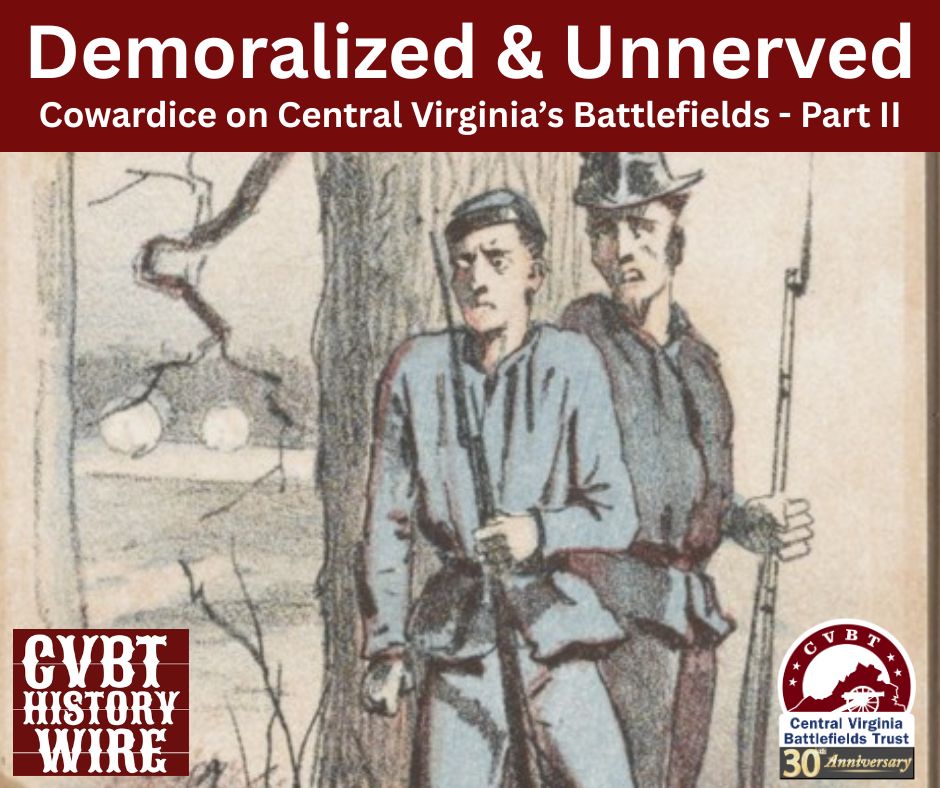
From “Life in Camp, Part I” by Winslow Homer
In this scene, Homer depicts two shaken soldiers seeking cover behind a tree to avoid artillery fire.
(Library of Congress)
Introduction
In addition to telling his unit’s battles and campaigns, Capt. Amos Judson also shared some thoughts on a few different war-related subjects in his 1865 regimental history of the 83rd Pennsylvania Infantry. In one such “digression” (as he calls them), he wrote: “I have often thought that an army was the best place in the world to study, and to become thoroughly familiar with human nature. Men of almost every age and nation, of every temper and capacity, and of every turn of mind are there to be found grouped together. In an army of so-called patriots, how many are to be found who are truly entitled to that virtuous appellation? How many of them have the ring and stamp of the genuine coin?”
Judson obviously had plenty of opportunities to observe human nature while commanding his company during the war. As to courage and cowardice, Judson wrote, “In my opinion, what is called courage is very much a matter of stomach with some men, of pride or principle with others, and a compound of both with all men.” He added, “It is moral courage that sustains a man when his life is in peril. In many instances it may be said to be the result of fear: for soldiers sometimes dread worse the punishment of a breach of duty on the field of battle than they do the bullets of the enemy.” Judson further explained, “I have said that courage is very much a matter of stomach. I have seen men fight well one day, when their stomachs were in good order, and give evidences of timidity the next, when their stomachs were out of order. A fit of indigestion makes a coward, for the time, of many a supposed hero. At such times it takes all the pride a man is master of to overcome the weakness of the flesh. If his indigestion amounts to absolute indisposition, his courage is gone by the board and he wants to get as far from danger as possible. But these fluctuations in his courage are merely temporary. His pride, or moral principle, is what sustains him in the long run.”
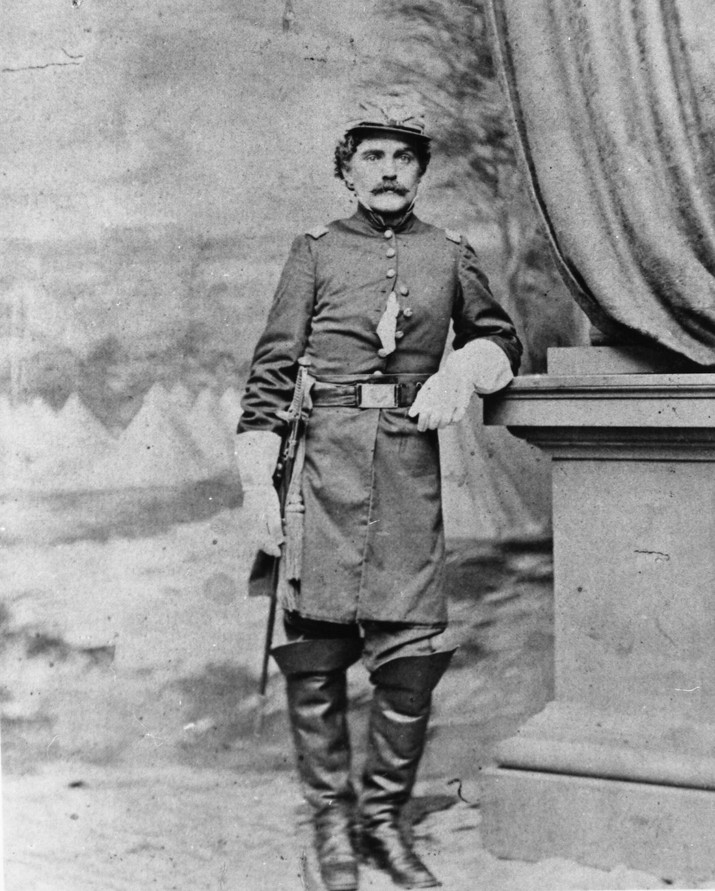
Judson shared some thoughts on combat courage and cowardice in his History of the Eighty-third Regiment Pennsylvania Volunteers, published in 1865.
(Hagen History Center)
Judson firmly believed that “men of the most reliable principles in private life make the best and bravest soldiers in the field.” And that “Therefore you will always find that quarrelsome bullies, thieves, cheats, sneaks and liars, or to sum it all up in one word, unprincipled men in private life, are, without exception, cowards and poltroons in the army.”
However, in Part I, we saw that for at least some soldiers, combat could get extremely complicated, very fast. Is it cowardice to give up and surrender on the battlefield when a situation seems hopeless? When panic strikes due to a surprise attack, is it cowardly to join the fleeing crowd in order to avoid being killed, wounded, or captured? Sometimes soldiers had to ask themselves if continuing to fight at long odds accomplished anything positive. As historian Earl Hess notes, “Perhaps a major reason that so many essentially solid and sincere men waffled in their duties during the war was that they could not consistently balance their moral and physical courage. At times, one force or the other might be weaker or stronger.”
The trying combat conditions that soldiers operated under could be increased significantly when other stressors such as climate, lack of rest, sickness, an inadequate diet, or illness were added on. In this Part II CVBT History Wire we will see some examples of these at Mine Run, the Wilderness, and Spotsylvania Court House.
The Mine Run Campaign
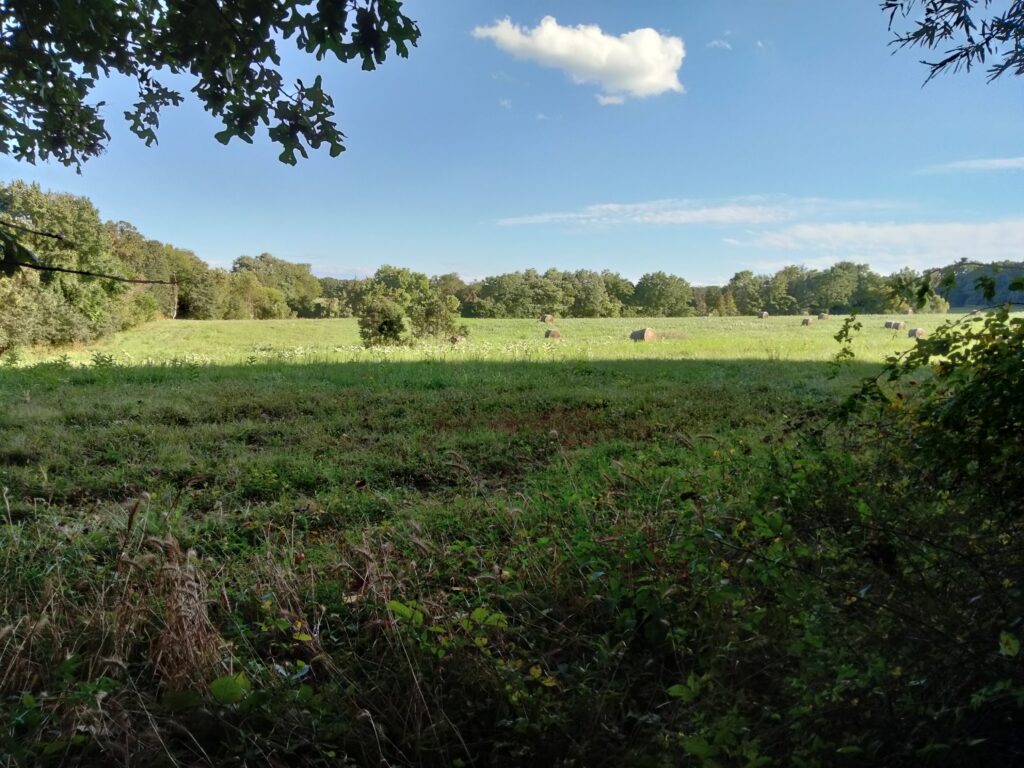
The Mine Run Campaign presented soldiers with a whole host of situations and unfriendly environmental factors that tested their patriotism and courage. Freezing temperatures and overstressed supply lines were not an ideal combination for military success and could present challenges to almost any individual’s resolution.
(Tim Talbott)
With some allegations of cowardice, it is difficult to determine what truly happened. Such was the court-martial case of Lt. Andrew Bentz Smith of the 87th Pennsylvania Infantry and his mysterious behavior during the Mine Run Campaign. Was he telling the truth or was he trying to conceal his reluctance to face battlefield dangers?
During the November 27, 1863, Battle of Payne’s Farm, when the unit it was fighting beside became panicked, the 87th, at that time serving with the Third Corps, was also forced to fall back. Behind the lines, Lt. Smith ran into his lieutenant colonel, James A. Stahel, and when ordered to help reform a battle line, Smith started to move off. Told to reform his company, Smith exclaimed, “My God, Colonel! I have no company any more!” Smith was able to gather and send some men forward, but he seemed uninterested in joining them.
If the battle was not confusing enough, darkness made it even more difficult to straighten things out. Those 87th soldiers sent forward soon started back in effort to find out where the regiment was gathering. Lt. Smith helped a wounded soldier to the rear hoping to point him to the field hospital but ended up taking the injured man all the way there. When Smith came back to where he started, all of his soldiers were gone. He eventually rounded up some others but did not find the bulk of the regiment and suggested these few fall in with a couple of units in Brig. Gen. John Hobart Ward’s brigade. Somehow the orphaned soldiers found the 87th by morning. However, Lt. Smith was not with them.
Lieutenant Smith finally reported in to Lt. Col. Stahle on December 2, claiming that he had been ill and then was unable to locate the regiment. During Smith’s absence an attack on the Confederate earthworks west of Mine Run was planned and almost went forward, but on November 30, Gen. Meade decided to cancel it. Was Smith intentionally delaying his return to avoid participating in the attack? Placed under arrest, Smith then submitted his resignation to Stahle, who in turn forwarded it. Brig. Gen. Benjamin F. Smith refused the resignation and ordered that Lt. Smith be dishonorably discharged. Court-martialed on January 14, 1863, for “misbehavior before the enemy,” and despite some contradictory witness accounts, the court found Smith guilty on all charges. He was cashiered from the army and died in 1875 at age 34 after an operation that required the amputation of a leg.
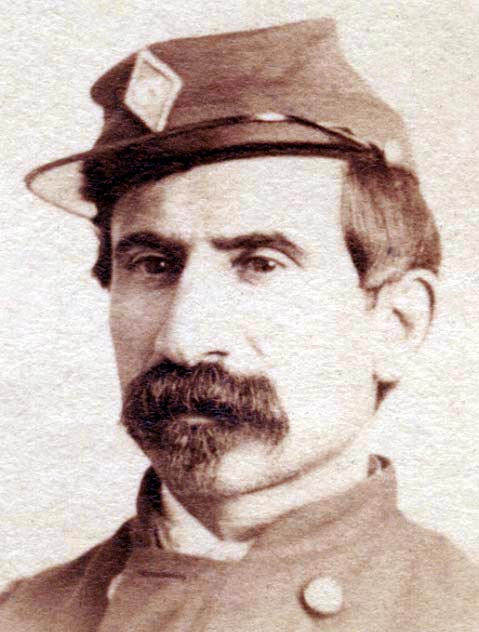
Stahel forwarded Lt. Andrew Smith’s resigntation to Brig. Gen. Benjamin F. Smith, who refused it and had Lt. Smith cashiered from service.
(Find A Grave)
The 17th Maine’s John Haley noted in his journal that at the Battle of Payne’s Farm the Confederates “attacked us with great spirit. General [William] French’s pets, who had been at the head of the column became nervous, so much so he couldn’t trust them to ‘precede him to glory.’” Therefore, French put in Maj. Gen. Willam Bell Birney’s division, which included Haley’s regiment. Of the skulkers, Haley wrote, “It was marvelous to see the way they put danger behind them, and any who were slow in their movements received added impetus from an army shoe, vigorously applied—a long desired opportunity for gratifying our personal spite.” Haley continued that the enlisted men “were not the only white-livered individuals this day. Certain of our own officials made themselves conspicuous at the front by their absence.” Haley either heard or saw one who “tried to induce a fellow to vacate a position behind a stump, but the soldier put his fingers to his nose and made a motion of contempt.”
William Reeder, who served in the 20th Indiana, wrote home on December 3, 1863, giving some details about the Mine Run Campaign. The 20th Indiana served in the same Third Corps division as John Haley’s 17th Maine. Some of Reeder’s account about the Battle of Payne’s Farm reads very much like Haley’s. Reeder noted that “After the engagement had been under fair way about one hour we moved up and went in on double-quick and relieved the front line, and well that we did, for they were broke[n] and all in confusion, but we soon rolled in the fire that made things tell and the Johnnies hunt their holes. It was tremendously hot work.” Reeder penned that “There were incidents occurring on the field that are never spoken of but are worthy of attention.” He apparently saw some soldiers’ courage give way as he wrote “we did have A lot of skedaddlers” and in his original letter provided names to nine of them. Reeder, probably like many other soldiers who were able to steel their nerves felt that those who could not “should be published to the world.”
The Battle of the Wilderness
Returning to the Wilderness region that they had left the previous December, the armies again experienced some combat challenges to their courage which were caused at least in part by the dense forest when they met in early May 1864.
Private Frank Wilkeson was only 15 years old when he ran away from home. After turning 16, he lied about his age and enlisted in the 11th New York Independent Light Artillery Battery in the spring of 1864. As an artillerist, he found there was little for him to do during the Battle of the Wilderness, so being curious, Wilkeson decided to sneak away to see the fighting. He soon came across a dead soldier, so he grabbed the deceased man’s rifle and equipment. Wilkeson’s plan was almost ruined from the beginning as he ran into a picket who informed Wilkeson that he was “sending stragglers back to the front.” As they were chatting a soldier attempting to avoid the fighting tried to slip by. The picket yelled “Halt!” But the man paid no attention and kept walking. The picket then cocked his rifle brought it to his shoulder and asked to see where the straggler was wounded. As Wilkeson told it, “The man had none to show. The cowardly soldier was ordered to return to his regiment, and greatly disappointed, he turned back.” Wilkeson saw other soldiers who were clearly wounded pass on and thought the “guards seemed to be posted in the rear of the battle-lines for the express purpose of intercepting the flight of the cowards.” Wilkeson, who was new to soldiering, perhaps initially believed that all soldiers were courageous, as at the time he thought the idea of picketing the army’s rear seemed strange.
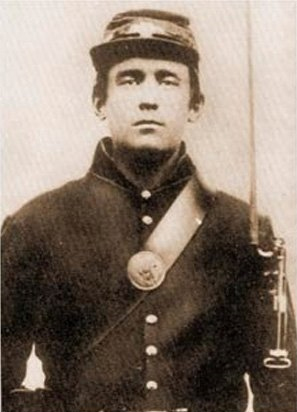
Fisk admitted that his courage at the Wilderness wained due to lack of rest, hunger, and trying situations.
(Find A Grave)
If ever there was a situation that might cause even the bravest of soldiers to quail, it would have been the fighting the Vermont Brigade experienced on the first day of the Battle of the Wilderness. Detached from the rest of their Sixth Corps comrades, Brig. Gen. George Washington Getty’s division stubbornly fought near the Orange Plank Road and Brock Road intersection. Pvt. Wilbur Fisk, whose 2nd Vermont Infantry lost 80 killed and over 250 wounded, wrote after the fight that “I am sure if I had acted just as I felt I should have gone in the opposite direction but I wouldn’t act the coward. . . . I clenched my musket and pushed ahead determined to die if I must, in my place and like a man.”
Fisk’s experiences in the Wilderness included combat rushes of adrenaline, like he described above, and lows, too. After getting “very insufficient rest” the night of May 5-6 and still suffering from “the terrible nervous exhaustion of fighting [on May 5]” which “had hardly left us in a fit condition to endure another such an ordeal so soon,” orders came to do so. Fighting with the Second Corps, they pushed forward over a mile on the morning of May 6, when all of a sudden, “our left was furiously attacked and a division of the Second Corps gave way, leaving us in a most perilous and exposed position,” Fisk explained. Caught in a quickly closing vise, Fisk wrote that “My legs saved me abundantly.” The private was discouraged. Before fleeing, he had just watched a friend die. “I was lying at the time as close to the ground as I could to load and fire, while he, less timid than myself, had raised himself up, and was loading and firing as fast as possible. The ball struck near his heart. He exclaimed, I am killed and attempted to step to the rear, but fell on me and immediately died,” Fisk penned. Fisk had to leave his friend.
Finding himself, “with a squad belonging to the division that broke,” Fisk saw a number of their officers pull “their swords and revolvers and tried the utmost to rally them again. They might as well have appealed to the winds,” Fisk thought. “I had got among a lot of stragglers, and I began to consider myself a straggler, too. At any rate I was shamelessly demoralized. I didn’t know where my regiment had gone to, and to be candid about it, I didn’t care. I was tired to death, and as hungry as a wolf.” Fisk honestly explained, “My object was to find a safe place in the rear, and in spite of revolvers, or swords, entreaties, or persuasions, I found it.” Among the confusing flotsam and jetsam, a colonel’s horse stepped on Fisk’s foot, destroying his shoe. Thus, “being barefooted, and lame, of course, I had little difficulty in accomplishing my purpose.” Fisk felt he “should have been ashamed of such conduct at any other time, but just then all I thought of was a cup of coffee, and a dinner of hard tack. . . . My patriotism was well nigh used up, and so was I, till I had some refreshments.” Fisk made “a deep impression on my haversack, which nourished my fighting qualities so that I could return to my regiment.” In this particular instance, Fisk fits Capt. Judson’s idea of a temporary loss of courage as explained in the introduction.
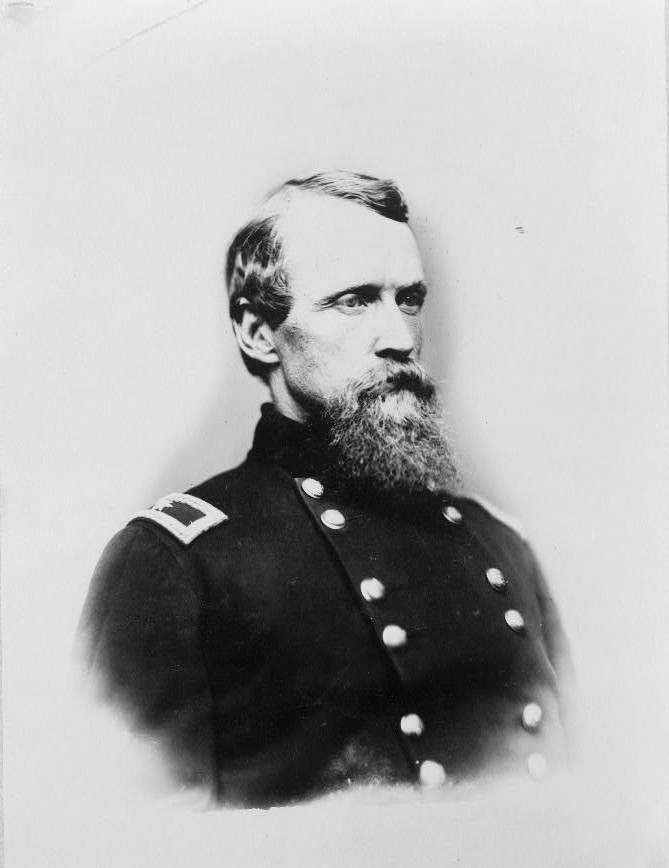
Birney’s Second Corps division were among the Federal units roughly handled on May 6, 1864 at the Wilderness.
(Library of Congress)
As vividly experienced by Fisk, the midday Confederate flank attack on May 6 smashed into the left side of the Second Corps, which was held by the divisions of Gersham Mott and David Bell Birney, along with the borrowed Sixth Corps division of George Washington Getty. Among Mott’s brigades was that of Col. Robert McAllister. In a letter home the following day, the colonel wrote that “the enemy opened up on us with one of the most terrific fires I have ever been under. They hurled their columns, massed in close formation, right in our front with a terable onset.” McAllister had a horse shot from under him and was hit by a spent ball that sent him to the corps hospital.
On May 7, Second Corps division commander Maj. Gen. David Bell Birney issued General Orders No. 29. In he stated his regret that his division’s “famous reputation for bravery and good discipline should have been tarnished by the conduct of the skulks, cowards, and scoundrels wearing officers’ uniforms, who aided in the disgraceful stampede of yesterday morning after the division had added to its reputation by its glorious conduct on the day before and that morning by its advance. Those regiments that disgraced themselves by the cowardly conduct of their officers will be noticed in the official report of this the great battle of the rebellion, [unless] they show by their conduct of to-day their regret for their cowardice.”
Before being flanked, and as alluded to earlier, the Second Corps had started the morning of May 6 pushing Maj. Gen. Cadmus Marcellus Willcox’s division of Lt. Gen. A. P. Hill’s corps from their position across the Orange Plank Road just west of the Brock Road intersection. Expecting to be relieved by Lt. Gen. James Longstreet’s corps first thing in the morning, these Confederate brigades were not prepared to receive such a heavy assault. While some regiments were able to make brief stands, others collapsed and fled west. By some accounts, Gen. Lee himself resorted to a bit of humiliation to try to get them to rally by playing on their perceived cowardice. According to Edward Porter Alexander, who said he got the information from Brig. Gen. Samuel McGowan, when Lee saw the South Carolinians and McGowan, he asked the brigadier, “My God! Gen. McGowan is this splendid brigade of yours running like a flock of geese?” McGowan, probably stung by the insinuation, replied, “No, General! The men are not whipped. They just want a place to form and are ready to fight as well as ever.” The timely arrival of Longstreet’s corps, including the famous Texas Brigade, stabalized the quickly deteriorating situation and urged Lee to seek safety.
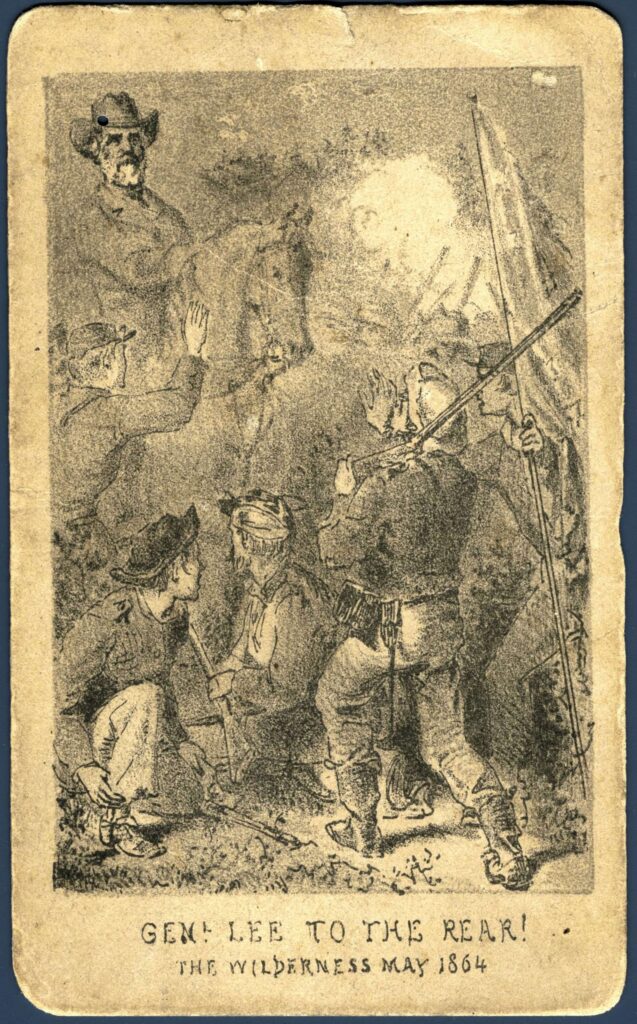
(Encyclopedia Virginia)
Positioned on McGowan’s left flank, Gen. William Kirkland’s North Carolina brigade had an even tougher row to hoe due to pressure from their left by Brig. Gen. Samuel Wadworth’s brigades. One North Carolinian writing to his father late that day jotted, “I am ashamed to say it, but I don’t think I ever saw troops behave so badly. . . . The men were still, doubtless, under the influence of the panic of the evening previous, and they ran like deer through the woods leaving the enemy far behind. And the further they went, the greater seemed to grow their fright.” Sgt. E. B. Tyler of the 14th Connecticut remembered that as they moved west, “Occasionally we captured a few prisoners, some of whom voluntarily deserted their lines and risking the gauntlet of fire by both sides would come running into our lines, throwing up their hands and calling out to us not to shoot. They were evidently badly frightened, as well they might be, but we shouted encouragingly to them ‘Come on in, Johnny, come on in Johnny’ and carefully held our fire until they were within our lines. Our shouts to them must have been heard in the rebel lines and perhaps encouraged others to take the risk.”
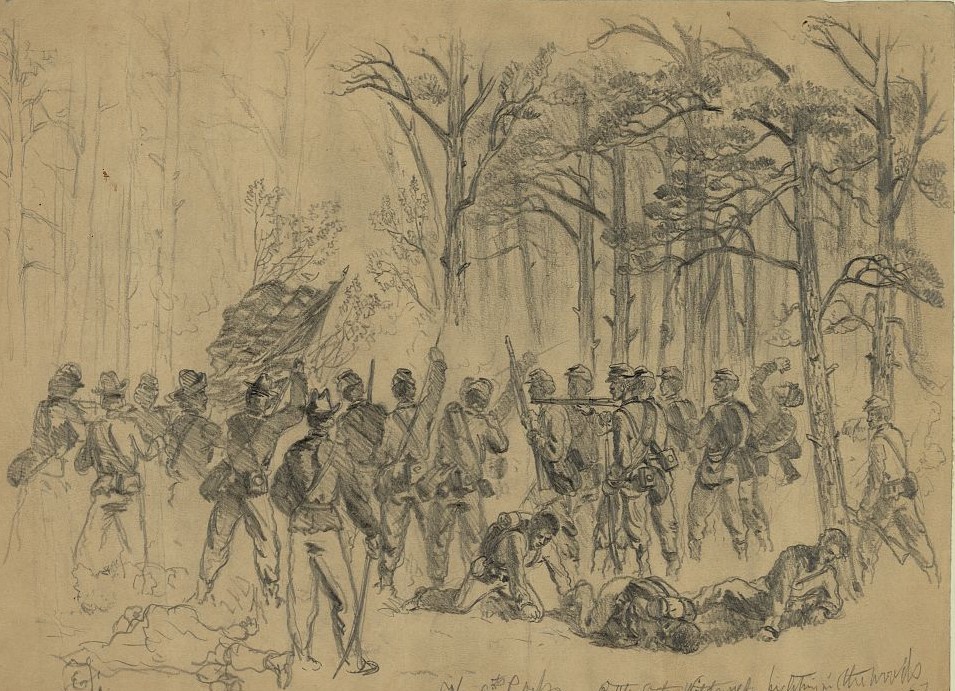
Sketch by Alfred Waud
(Library of Congress)
On the Orange Turnpike sector, Pvt. George W. Nichols of the 61st Georgia Infantry, who served in Brig. Gen. John B. Gordon’s brigade, remembered their attack on the right flank of the Sixth Corps during the evening of May 6. After marching to get into position, Nichols recalled, “We came up in thick woods in the wilderness and were in about 100 yards of them before their guards saw us.” Their pickets fired, but did little damage. “We fired one volley at them, raised a yell and charged them. They fled at once, leaving their guns, blankets, knapsacks, haversacks, tents, canteens, some hats and, in fact, everything they had,” the Georgian noted. The route was such a surprise that “We could not give them but two volleys. It seemed like scaring up a bunch of partridges or crows, for the Yankees left us almost as quickly as partridges could. It was like shooting birds ‘on the wing.’ They left stampeded and panic stricken. I am sure there were enough guns to have armed our brigade three or four times, and several car-loads of blankets, tents, clothing, etc.”
Captain James H. Wood of the 4th New York Artillery remembered that “A horseman came flying out of the woods opposite us with sword in hand and, I think, without his hat. It was General Sedgwick. Tears stood in his eyes and his features expressed the deepest emotion as he cried out: ” Halt! For God’s sake, boys, rally! Don’t disgrace yourselves and your General in this way!” Sedgwick posted a color bearer hoping he could rally the fleeing troops. All of a sudden, “a well aimed volley struck the colors, wounding the color-bearer, killing a soldier near him, and, I think, striking the General’ s horse.” Sedgwick pointed to an officer to mark a line and rode off after muttering what Wood thought was “The damned devils.” Wood saw that there “was no organization.”
The Battle of Spotsylvania Court House
The hurried march from the Wilderness to Spotsylvania probably only increased the chances of some soldiers succumbing to instances of combat failure. Such may have been the case on May 8 for Gen. Cullen Battle’s brigade of Alabamians. Writing the following day, Battle noted, “It has been said by staff officers at higher headquarters that Battle’s brigade would not advance.” Battle shared his perspective of what happened by explaining, “I attempted to lead forward all the troops at that point” by taking “the colors of the Third Alabama in my hand, went forward, and asked the men to follow.” The general admitted that the results were not the positive ones that he had in mind but thought it was “greatly attributable to physical exhaustion from long marching, constant labor, and their rapid advance.” Regardless of the reason, Battle felt the need to explain the situation and “insist on a full measure of justice.”
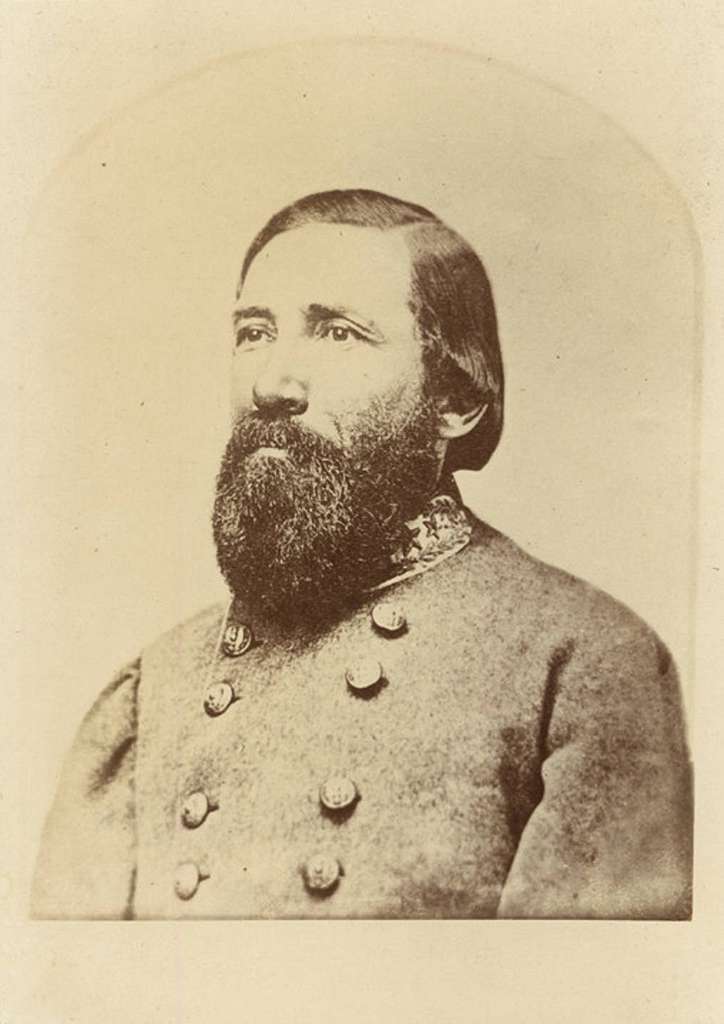
(Public Domain)
Prior battlefield experiences during the Mexican American War helped Brig. Gen. John Henry Hobart Ward’s Civil War career get off on the right foot. He first served as colonel of the 38th New York Infantry before receiving a promotion and commanding a brigade at Fredericksburg, where he displayed conspicuous courage on the south end of the battlefield. But in the next battle, Chancellorsville, Ward’s reputation took a dent, when during a night fight on May 2 he bolted to the rear on his horse and almost ran over two soldiers who found themselves in his way. It appears that Ward regained his battlefield bearings at Gettysburg, where he was wounded. However, at the Wilderness, on May 6, Ward faltered again. Like at Chancellorsville he made his way to the rear, but rather than using a horse as his conveyance, it seems Ward rode away on an artillery caisson. Allegations of drinking came, and Ward was placed under arrest according to Assistant Secretary of War Charles Dana.
Yet, a few days later at Spotsylvania, Ward was back in command of his brigade. On the evening of May 10, while waiting to lead an attack against the Confederate left at Laurel Hill, Ward received a slight wound from an artillery fragment. Initially refusing to relinquish command, Ward soon did and went to clean and bandage his wound and returned. The assault actually temporarily broke through the Confederate line, but apparently Ward had absented himself again without telling anyone.
Ward’s last act came a couple of days later when during the Second Corps attack on the Mule Shoe salient, Gen. Birney spotted Ward making his way to rear and using the excuse that he needed his mount. Birney ordered a nearby aide to give Ward his horse and told Ward to lead his troops. Maj. Gen. Hancock soon spotted Birney and shared that he thought Ward was drunk. Birney went and found Ward and had him arrested for intoxication. Ward was relived of his command, and instead of a court-martial, the army chose to honorably discharge the general, thus ending his uneven Civil War career.
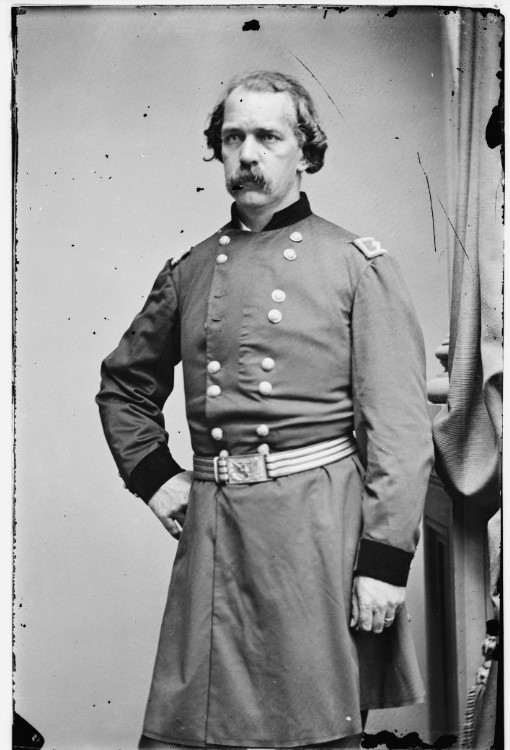
(Public Domain)
A moment similar to the one at Widow Tapp field in the Wilderness, where soldiers of A. P. Hill’s corps fled past Gen. Lee, also occurred on May 12 at Spotsylvania. As some of Gen. Richard Ewell’s Confederate soldiers flowed back from the earthwork lines at the Mule Shoe salient, Capt. Robert Stiles of the Richmond Howitzers, who was trying to get some artillery back in the defenses, spotted Lee. “His face was more serious than I had ever seen it, but showed no trace of excitement or alarm,” Stiles remembered. “Numbers of demoralized men were streaming past him and his voice was deep as the growl of a tempest as he said: ‘Shame on you, men; shame on you! Go back to your regiments; go back to your regiments!’” Stiles had seen the look of combat fear before. He believed that “every soldier of experience knows that when a man has reached a certain point of demoralization and until he has settled down again past that point, it is absolutely useless to attempt to rouse him to a sense of duty or of honor.” Fortunately for Lee, Gen. John B. Gordon’s brigade was on their way to counterattack. Lee moved as if to lead with Gordon, but Gordon and his soldiers reenacted the Texas Brigade’s Wilderness scene of almost a week before and shouted, “General Lee to the rear! General Lee, to the rear!”
Like some other officers, Captain Stiles felt that fighting behind earthworks tended “to demoralize the men.” In his memoirs he wrote: “The protection of a little pile of earth being in front of a man and between him and his enemy, his natural tendency is to stay behind it, not only as to part, but as to the whole of his person. I have more than once seen men behind such a line fire their muskets without so much as raising their head above the curtain of earth in front of them; fire, indeed, at such an inclination of their gun barrels upward as to prevent the possibility of hitting an enemy unless that enemy were suspended in the sky or concealed in the tree tops.”
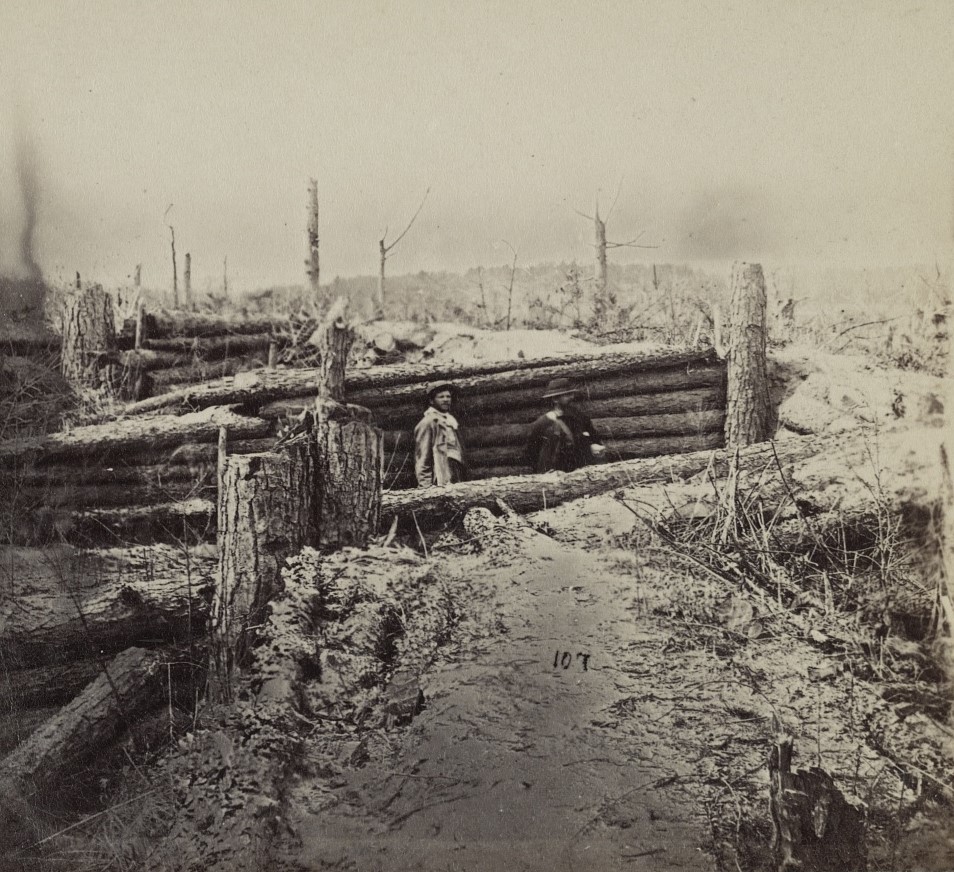
Despite their many advantages, some officers believed that earthworks could also demoralize soldiers who priortitzed protecting themselves over fighting.
(Library of Congress)
On and along the Mule Shoe salient it was bedlam on May 12. Some soldiers fought for a while and then their will to continue finally broke. Such was the case witnessed by Henry Keiser of the 96th Pennsylvania. Keiser jotted in his diary that “The rain fairly poured down this forenoon, but we kept up the fire and we were covered with mud from head to foot.” While they poured the lead into their foes, “a Captain and twelve of his men jumped up in all the fir[ing], and ran into our lines (our boys not firing on them). As they passed by me the Captain said, ‘The Devil couldn’t stand it in there.’ They were covered with blood and mud,” Keiser wrote.
On May 12, Sgt. Austin Stearns of the 13th Massachusetts (Fifth Corps) noted in his diary that his unit “Went on a reconnaissance to find the enemy, found them in force, came back and took up our old position.” Apparently during the movements at least one soldier was wounded and another, Corp. James Slatery went missing.” Four days later Stearns jotted, “Slatery came up, and I had the disagreeable duty of stripping off his stripes.” A few lines later Stearns explained, “In the forenoon Corp. Slatery [Co. K] and Corp. Gould of Co. H came up, having fallen out without leave. A drumhead Court-martial was ordered, and both were ordered before it, and both were sentenced to be reduced to the ranks in the presence of the Regiment.” Stearns hesitated when ordered to cut off Slatery’s chevrons “for I knew Jim was a good soldier and prided himself on his stripes, and was an especial friend of mine.” But when told “do your duty!” Stearns took his knife and “cut some of the stitches, and loosed the ends quickly, [and] tore them off. . . .”
One drastic measure that some soldiers resorted to in order to avoid the continued dangers of combat was to create a self-inflicted wound. In his report on the Overland Campaign, Dr. Thomas McParlin, who served as the Army of the Potomac’s Medical Director noted that “The wounded from the front arrived . . . [in Fredericksburg] in every condition, those in the [ambulance] trains of [May] 11th and 13th being excepted. . . . A large number of the sick, slightly wounded, many of the latter self-mutilated, did not go to the field hospitals nor accompany the regular trains, but straggled to Fredericksburg and thence to Belle Plain, relying on the agents.”
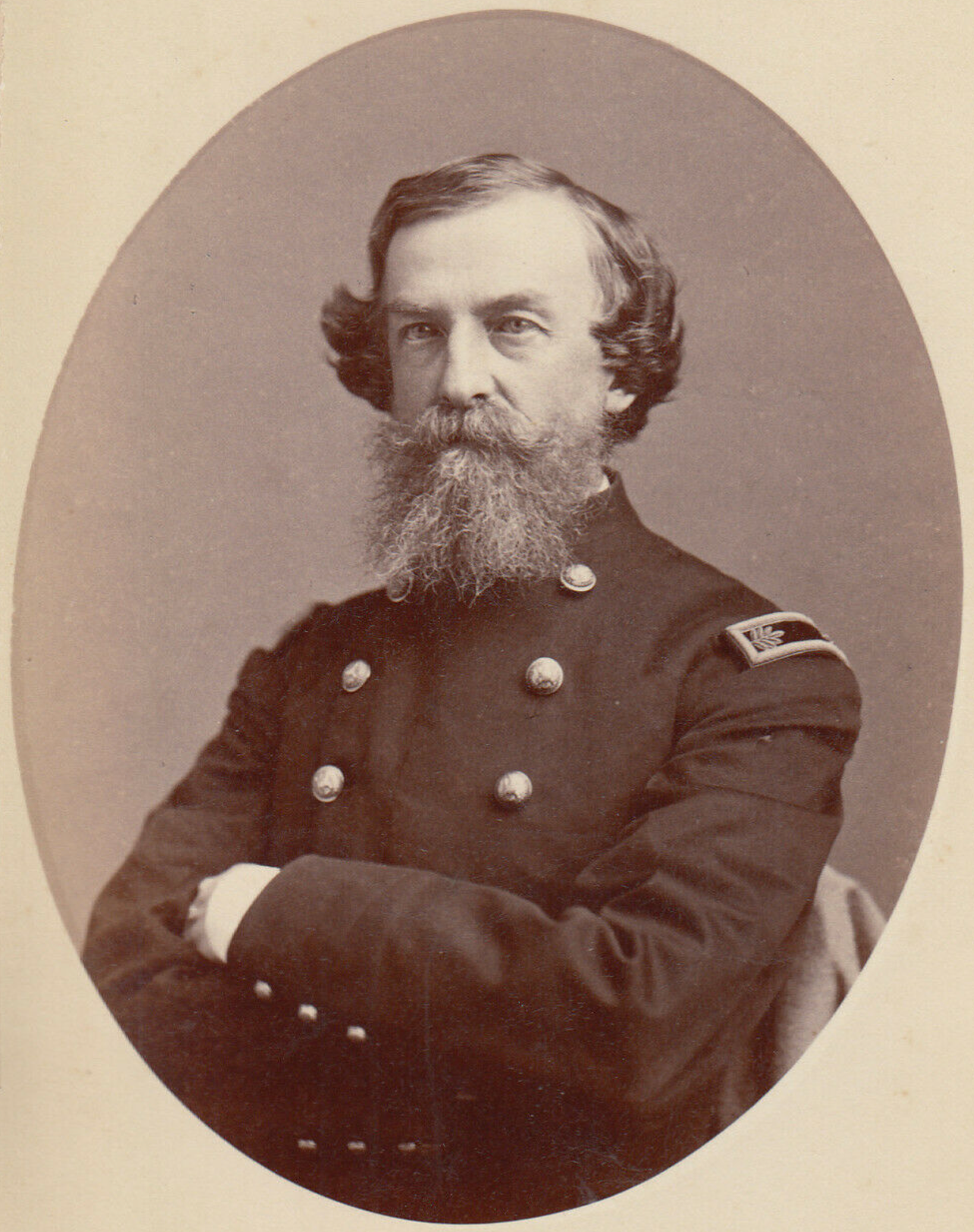
McParlin noted that some of the wounds sustained byt the Army of the Potomac at the Wilderness and Spotsylvania were self-inflicted.
(Find A Grave)
Toward the end of the two weeks of fighting at Spotsylvania, Pvt. Frank Wilkeson of the 11th New York Independent Light Artillery Battery volunteered to go to a spring located in a piece of woods behind their lines and fill some canteens for himself and his comrades. Once he arrived, he “saw many soldiers. Some were “Hollow-eyed, tired looking men” but he noted that they were not skulking “coffee-boilers;” they were genuinely physically and mentally exhausted soldiers who “had sought the comparative safety of the forest to sleep.” Going farther upstream to find cleaner water, Wilkeson happed to spy “a colonel of infantry put on his war paint.” The artillerist called it “a howling farce in one act. . . .” The colonel, a “blond, bewhiskered brave sat safely behind a large oak tree. He looked around quickly. His face hardened with resolution.” Thinking that no one was watching, the colonel “took a cartridge out of his pocket, tore the paper with his strong white teeth, spilled the powder into his right palm, spat on it, and then, first casting a quick glance around to see if he was observed, he rubbed the moistened powder on his face and hands, and the dust-coated the war paint.” Wilkeson wrote, “Instantly he was transformed from a trembling coward who lurked behind a tree into an exhausted brave taking a little well-earned repose.”
Conclusion
Deservedly so, history has smiled brightly on those who courageously went forward amidst the leaden missiles, shot, shell, and canister. They are, after all, the ones who we set our eyes upon for inspiration and hope to emulate as we face and fight our own challenges in life.
But as abundant evidence points out, not all Civil War soldiers were always brave. Some fled, some froze up, some hid, some sulked, some feigned sickness. Do they, too, offer us some lessons? Yes, they do indeed. Perhaps historian Chris Walsh puts it best: “Cowardice casts a shadow that throws courage into relief. Knowing what happened to those who failed to stand by their colors enhances our appreciation of those who did and our appreciation of the cost of war to all who served.”
Some Sources and Suggested Reading
Dennis Brandt. “A Question of Cowardice,” in America’s Civil War (May 2007).
Peter S. Carmichael. The War for the Common Soldier: How Men Thought, Fought, and Survived in Civil War Armies. University of North Carolina Press, 2018.
Earl J. Hess. Shattered Courage: Soldiers Who Refused to Fight in the American Civil War. University Press of Kansas, 2026.
Earl J. Hess. The Union Soldier in Battle: Enduring the Ordeal of Combat. University Press of Kansas, 1997.
Gerald F. Linderman. Embattled Courage: The Experience of Combat in the American Civil War. Free Press, 1987.
James M. McPherson. For Cause and Comrades: Why Men Fought in the Civil War. Oxford University Press, 1997.
Chris Walsh. “‘Cowardice Weakness or Infirmity, Whichever It May Be Termed’: A Shadow History of the Civil War, in Civil War History, Vol. 59, No. 4 (December 2013), 492-526.
Parting Shot
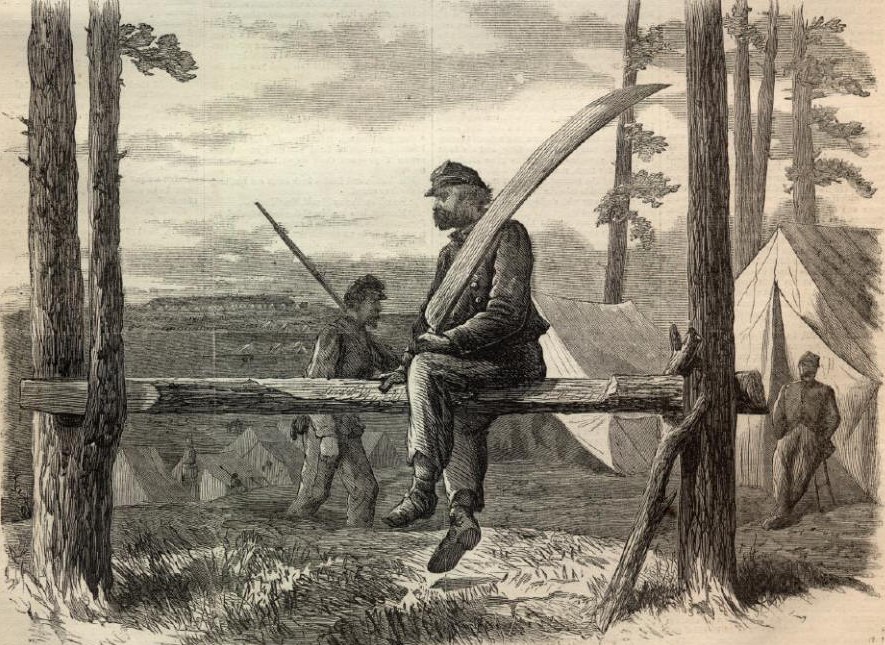
Woodcut image from a sketch by A. W. Warren
Although this wood cut image shows a scene from near Petersburg, the “wooden horse” was a common Civil War punishment througout the conflict and one deemed appropriate for alleged acts of cowardice on the battlefield by enlisted men.
(Harper’s Weekly, November 26, 1864)
Circular, May 19, 1864
“A field-officer’s court-martial will be convened at once in each regiment of this command for the trial of skulks and stragglers. Summary punishment should at once be inflicted on all such men. It is considered that if the full extent of punishment of a field-officer’s court is inflicted, and this done at once, that it will have a beneficial effect. Sentence should be executed in presence of the command to which the person belongs. There are, in addition, to loss of month’s pay, punishments sanctioned by usage, such as tying up, placarding, riding wooden horses, &c., that come within the authority of a field-officer’s court that would go far toward putting a stop to these crimes.”
By command of Major-General [David Bell] Birney

NEWSLETTER SIGN-UP
Join our community! Sign up for our newsletter to receive exclusive updates, event information, and preservation news directly to your inbox.
STAY UP TO DATE

Celebrating 30 Years and Over 2,000 Acres of Battlefields Preserved