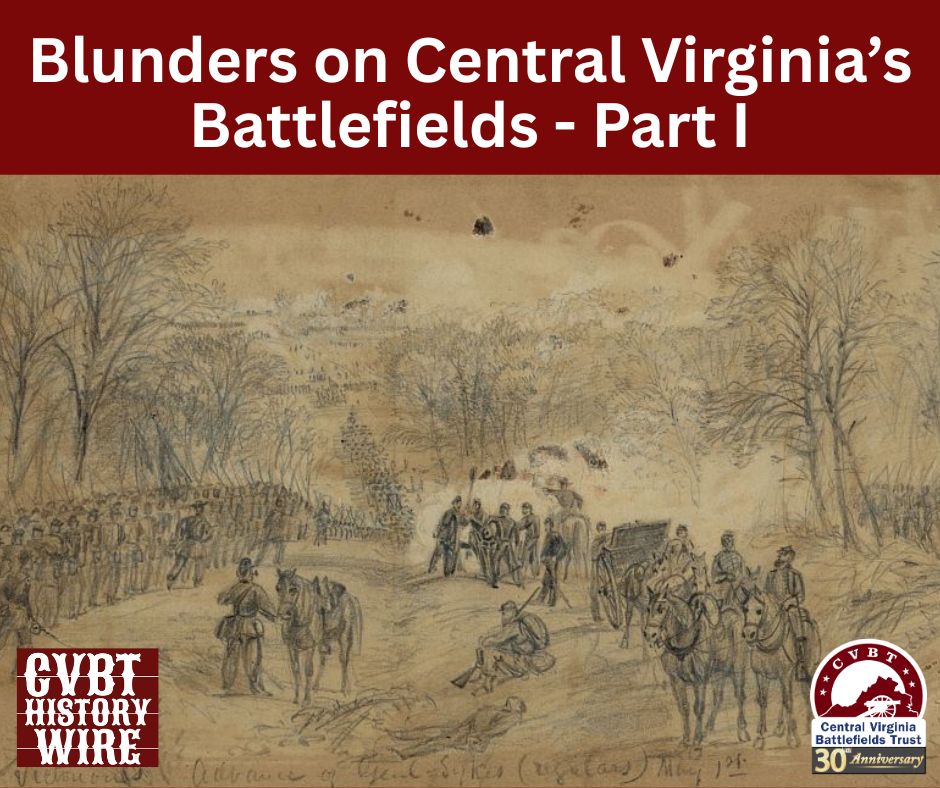
Sketch by Alfred Waud
In this scene, Waud shows Maj. Gen. George Sykes’ Fifth Corps division advancing east on the Orange Turnpike to engage in battle and before
being ordered to withdraw by Maj. Gen. Joseph Hooker.
(Library of Congress)
Introduction
Mistakes happen in life. They are, after all, part of the experience of living. We’ve all been there. When we do err, hopefully we learn from it and do better in similar future situations. The problem with mistakes is that they are difficult to foresee, and too often arise with unexpected situations, and unfortunately produce unintended results. In war, mistakes can be particularly concerning, both in terms of potentially losing a battle (or even the conflict), and of course, in terms of the costs in individual’s lives.
Civil War history is filled with missteps. Historians often point out blunders as a teaching tool. However, it is important to remember that when we study history, we are looking back with the advantage of hindsight. It is also important to keep in mind the all too often difficult circumstances swirling around people of the past who had to make complicated decisions. Sometimes mistakes came about due to faulty information; sometimes they happened due to time constraints or other demanding pressures; yet other times they occurred because of personal biases, naivety, arrogance, or a whole host of other factors.
An advantage of examining battlefield mistakes is that it helps remind us of the importance of considering historical contingency. Sometimes when looking back at past events we succumb to the misleading idea that historical happenings were fated to play out the way they did. Battlefield mistakes occurred most often due to human decisions and actions, or inactions, not because of a predetermined course of events.
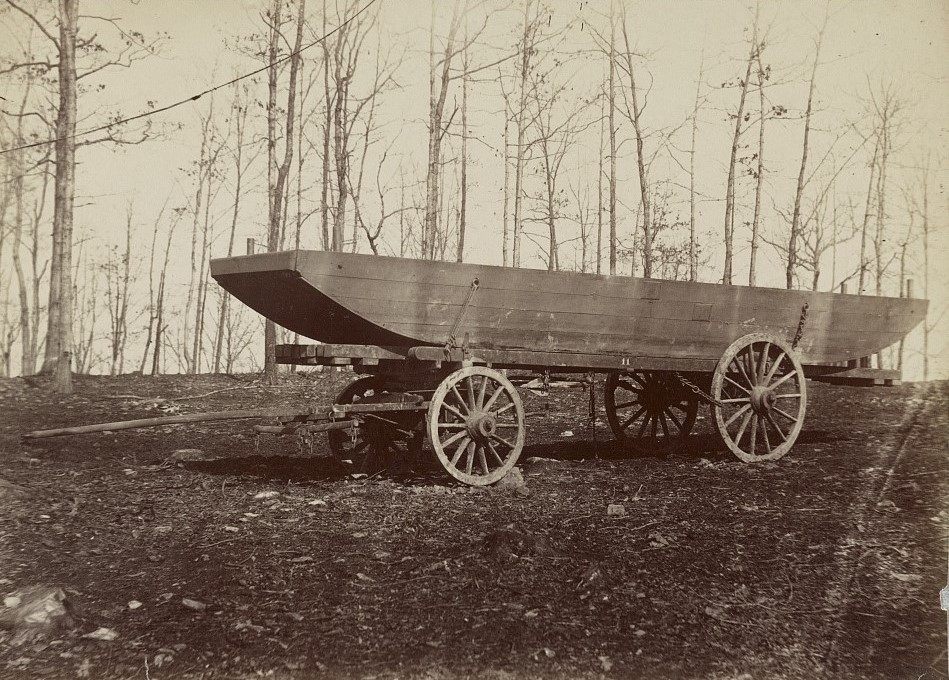
The miscommunication resulting in the Army of the Potomac not having pontoon boats avaiable for an early crossing of the Rappahannock River at Fredericksburg was among the many blunders that occurred on central Virginia’s battlefields.
(Library of Congress)
Some of the blunders on central Virginia’s battlefields have become legendary. Each of the major battles have at least one serious misstep that probably comes to mind for those who closely study the area’s engagements. For example, at Fredericksburg, the obvious one is the miscommunication error about the pontoon boats needed by the Army of the Potomac to cross the Rappahannock River. A notable misstep at Chancellorsville was the mortal wounding of Lt. Gen. Thomas J. “Stonewall” Jackson by his own men. Of course, a similar blunder happened a year later with the wounding of Gen. James Longstreet at the Battle of the Wilderness, which left the Army of Northern Virginia without his needed leadership for several months.
For this month’s CVBT History Wire we’ll examine some blunders that led to significant costs for one army or the other at Fredericksburg, Chancellorsville, and the Mine Run Campaign.
The Battle of Fredericksburg
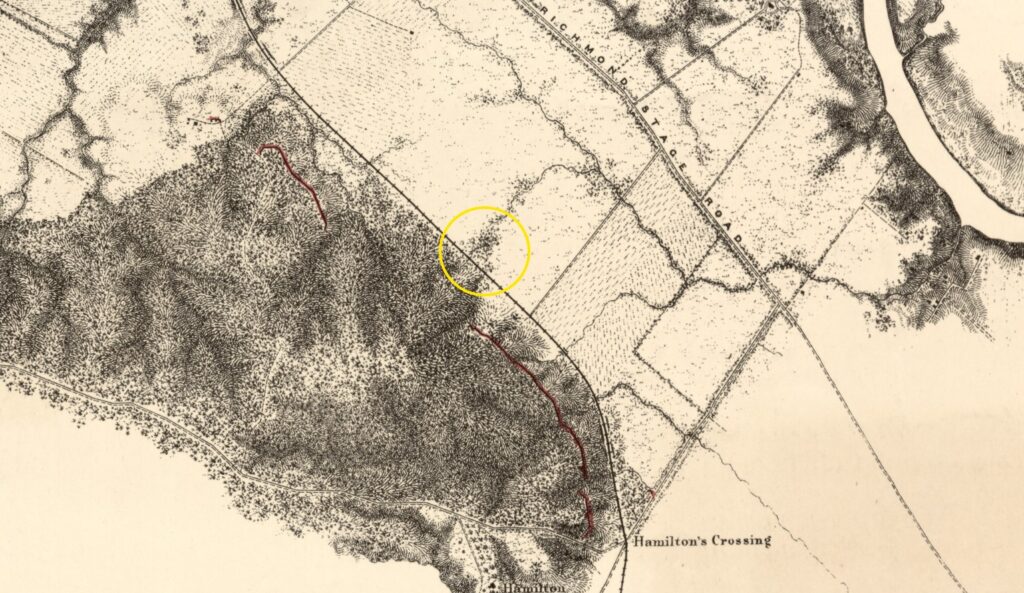
Produced by cartographer Nathaniel Michler in 1867, this cropped section of the map shows the southern end of the Fredericksburg battlefield. Note the yellow circle area where the swampy and wooded salient pointed out across the railroad tracks.
(Library of Congress)
One of the hallmarks of good generalship during the Civil War was the ability to read the terrain and then use it to best advantage. Sometimes, however, a battlefield’s landscape could prove to be deceiving. This was especially true if one happened to underestimate a foe’s motivation to try an unexpected move.
Assigned to defend the south end of the Fredericksburg battlefield, Lt. Gen. Thomas J. “Stonewall” Jackson primarily arrayed his men along the available high ground near the Richmond, Fredericksburg and Potomac Railroad (RF&PRR) tracks. Jackson’s position ran from Hamilton’s Crossing on the south end of his line to a few hundred yards south of where the tracks crossed Deep Run, a distance of about a mile or so. As the RF&PRR tracks coursed northward from Hamilton’s Crossing, they slowly edged away from the advantageous high ground and traveled through more rolling or level terrain.
Located near Hamiton’s Crossing, Prospect Hill provided an ideal position for Jackson’s artillery. Just north of Prospect Hill, a jutting salient of timber pointed out to the east past the railroad tracks and toward the Federal position along the Richmond Stage Road (sometimes referred to as the Bowling Green Road). The area probably remained timbered due to its swampy nature, thus making it difficult ground to cultivate.
Believing that no Federal troops would traverse the quagmired area, Confederate leadership, including Jackson, Gen. Robert E. Lee, and Maj. Gen. A. P. Hill, all felt it was unnecessary to put soldiers in this gap of wooded marshy land. Therefore, from the left regiment of Brig. Gen. James J. Archer’s brigade to the right regiment of Brig. Gen. James Lane’s brigade, an unprotected gap of about 600 yards was left open. Brig. Gen. Maxcy Gregg’s five South Carolina regiments were placed in reserve on the forested upper hillside behind the opening as a measure of insurance. Artillerists Brig. Gen. William Nelson Pendleton and Col. Stapleton Crutchfield also positioned guns to try to make the weakly defended area seem less vulnerable.
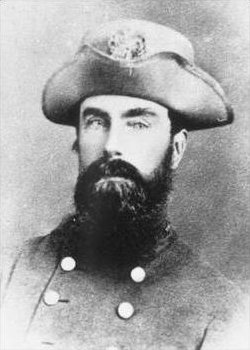
Gregg led a brigade of five South Carolina regiments at Fredericksburg.
(Public Domain)
When Maj. Gen. George Meade’s First Corps division advanced toward the RF&PRR tracks on the morning of December 13, 1862, his three brigades led the day’s attack on that part of the battlefield. With support from Brig. Gen. John Gibbon’s division on his right and Brig. Gen. Abner Doubleday’s division on his left, Meade and his three brigades of Pennsylvania Reserves anticipated going forward.
Col. William Sinclair’s brigade led Meade’s division but was soon halted to allow the other two brigades to catch up. They then received Confederate artillery fire from the left. This unexpected jolt came from a single gun directed by Maj. John Pelham of Brig. Gen. J.E.B. Stuart’s Horse Artillery. Federal artillery returned fire toward Pelham’s position, as well as at the Confederate guns on Prospect Hill, who then shot back. After causing a significant delay, Pelham withdrew his gun, and the Prospect Hill guns quieted due to the counterbattery fire. Meade’s stalled attack finally moved forward again across the open field.
Largely unimpeded by natural obstacles, the left and right brigades of Meade’s division reached the railroad first and attracted the fire of the Confederate defenders in those sectors. Meanwhile, Sinclair’s men entered the point of swampy woods, which slowed them at first, but they continued to move toward the railroad tracks. Near the tracks, Col. Sinclair received a wound to the foot and Col. William McCandless took over leadership of the brigade.
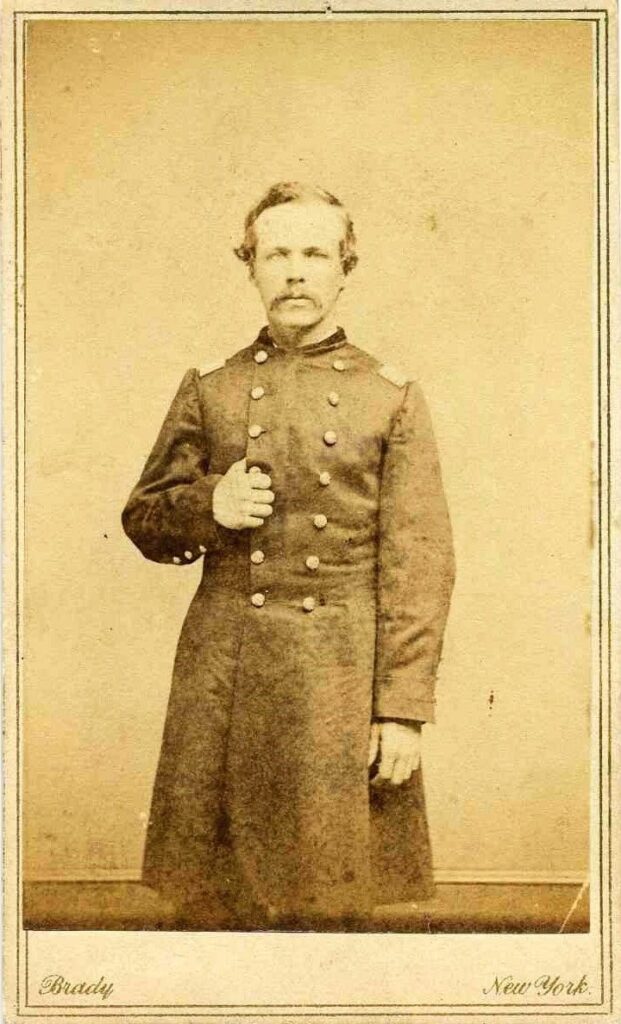
Sinclair received a wound to his left foot early in the Fredericksburg fight.
(Find A Grave)
Finding no immediate defenders in their front, they crossed the tracks and started to move up the hillside. The further they went up the hill, the closer they got to Gregg’s South Carolinians, who despite being positioned above this vulnerable gap, their lines were far enough back that the trees blocked their view of Meade’s assault. Gregg’s men lounged around with their rifles stacked. When the southerners finally saw the Pennsylvanians, they scurried for their weapons, but Gregg feared the attackers were friendly troops and cautioned his men not to shoot. McCandless’s men let loose a volley that smashed the right two regiments of Gregg’s brigade, mortally wounded Gregg, and caused confusion in his brigade as its command passed to Col. David Hamilton. A brief hand-to-hand fight occurred before the southerners withdrew.
With the South Carolinians out of the way, the Pennsylvanians pushed further west and north but became disjointed in the confusion. Running low on ammunition and receiving no reinforcements despite successfully cutting the Military Road, and thus dividing Jackson’s forces, they soon were forced back down the hill by troops from Brig. Gen. Jubal Early’s division, primarily Col. James Walker’s brigade. The Stonewall Brigade from Brig. Gen. William Taliaferro’s division also provided assistance.
Gathering at the railroad tracks, Meade hoped reinforcements would arrive for an opportunity to retake the hillside, but after collecting a hodge-podge of his Pennsylvania units, and finally with the late arrival of Brig. Gen. David Bell Birney’s Third Corps division, a Confederate counterattack ended any chance of Meade reclaiming his previously hard won and then dearly lost ground.
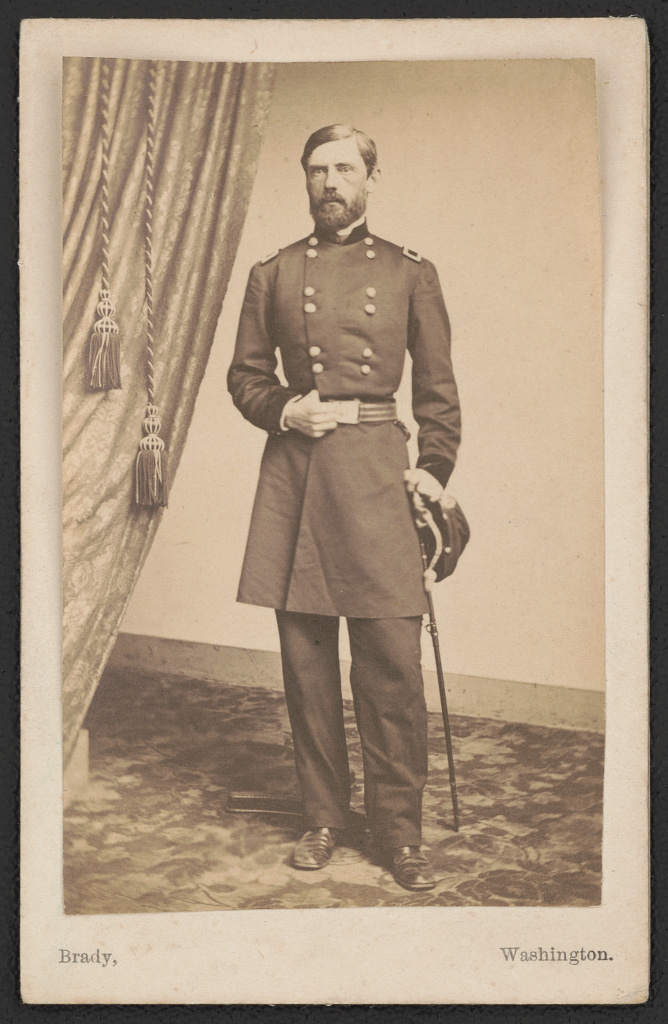
Reynolds did not have his best battlefield day at Fredericksburg.
(Library of Congress)
There were plenty of mistakes on that part of the battlefield to go around. Had Lee, Jackson, and Hill placed a stronger defensive line just west of the railroad tracks and not so far up the hillside where Gregg’s brigade was positioned, it would have likely served them much better than their actual choice of leaving the swampy gap so unprotected. On the Federal side, Maj. Gen. Willam Franklin, who commanded the Left Grand Division, and First Corps commander Maj. Gen. John Reynolds are both also to blame for not finding timely support for Meade’s men. Additionally, had Gen. Birney’s Third Corps division been on hand quicker to reinforce Meade’s successful assault up the hill, it may have provided enough force to make a real difference. Meade thought so at least. Writing to his wife after the battle he stated, “The slightest straw would have kept the tide in our favor.”
The Battle of Chancellorsville
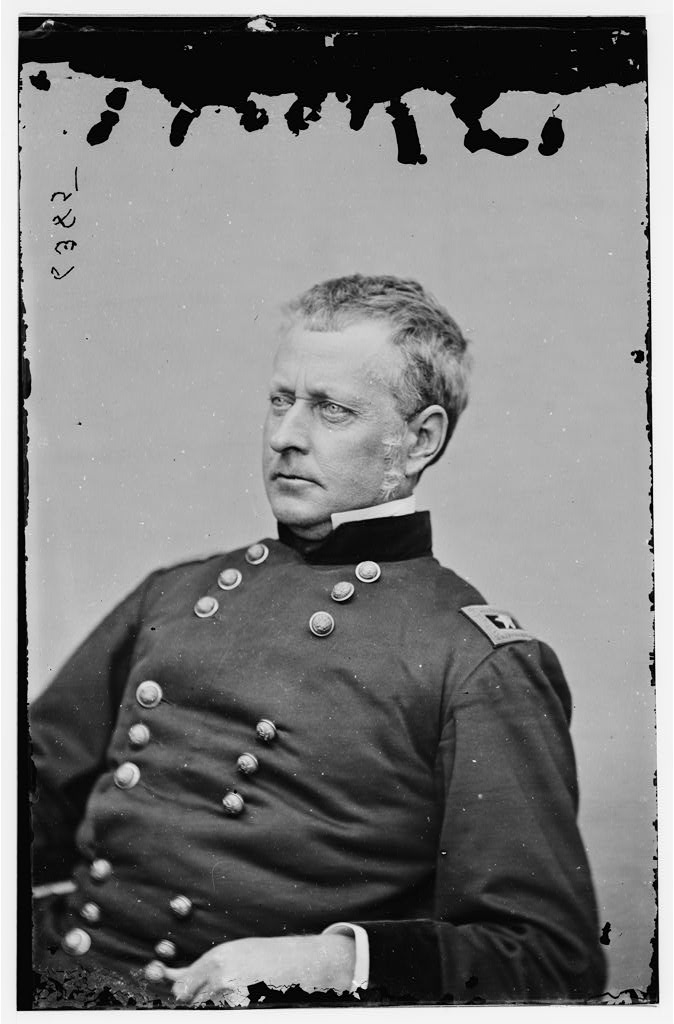
(Library of Congress)
On April 27, 1863, some of the Army of the Potomac’s corps were on the move. Maj. Gen. Joseph Hooker’s goal was to move to the west, cross the Rappahannock and Rapidan Rivers and come around the Army of Northern Virginia’s left flank, forcing Lee’s army out of its well-fortified positions at Fredericksburg and fight a battle on open ground. Additionally, Hooker dispatched Maj. Gen. George Stoneman and the majority of the army’s cavalry on a raid toward Richmond with the intention of damaging the Virginia Central Railroad and the Richmond, Fredericksburg, and Potomac Railroad, both vital supply lines for Lee’s army.
The army’s newest commander was confident about his plan, his ability to lead his army, and his chances of success. Hooker’s self-assuredness was boosted by his off the battlefield performance since taking over leadership of the army in the wake of the infamous Mud March and Maj. Gen. Ambrose Burnside’s subsequent dismissal three months earlier. By instituting several new measures, Hooker had virtually rebuilt the army, increasing its once flagging morale, and inspiring hope in its soldiers that victory would come with the next fight.
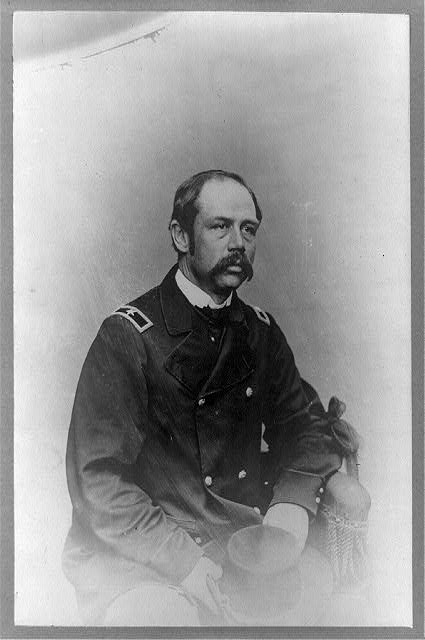
Sharpe headed the Army of the Potomac’s Bureau of Military Information
(Library of Congress)
One of Hooker’s new measures was establishing the Bureau of Military Information (BMI), which was headed by Col. George Sharpe. The BMI’s directive was to collect accurate intelligence from various sources about important things like enemy troop strength and expected movements and then report it back to army headquarters to help make effective decisions. The army chief’s confidence was evidenced by a quote he supposedly boasted to a group of officers: “My plans are perfect, and when I start to carry them out, may God have mercy of General Lee, for I will have none.”
All went well in the beginning. The Fifth, Eleventh, and Twelfth Corps marched west to Kelly’s Ford and crossed the Rappahannock River. The Eleventh and Twelfth Corps then crossed the Rapidan River at Germanna Ford, while the Fifth Corps crossed the Rapidan at Ely’s Ford. Eventually, two divisions of the Second Corps would cross the Rappahannock at U.S. Ford. So, by April 30, those four corps were at or near Chancellorsville. Hooker initially held the Third Corps and the First Corps at Fredericksburg, along with the Sixth Corps and a division of the Second Corps, to keep Confederate troops there in place.
By taking the initiative, Hooker made Lee and the Army of Northern Virginia react. Lee, already shorthanded with the absence of Lt. Gen. James Longstreet and two of his divisions, which were previously dispatched to southeastern Virginia, now had to decide how to meet the Army of the Potomac’s threat. Lee reacted appropriately. He dispatched Jackson’s corps from their camps south of Fredericksburg toward Chancellorsville and ordered Maj. Gen. Jubal Early’s division to remain and defend Fredericksburg.
On the morning of May 1, Hooker’s confidence remained sky high and it only rose from the reception he received from his troops at Chancellorsville who were eager for a victory. Hooker hoped the day would end with the Army of the Potomac both outflanking the Army of Northern Virginia’s defenses and securing the important position on the Spotsylvania County side of the Rappahannock River at Banks’ Ford, thus taking some stress off of his supply lines.
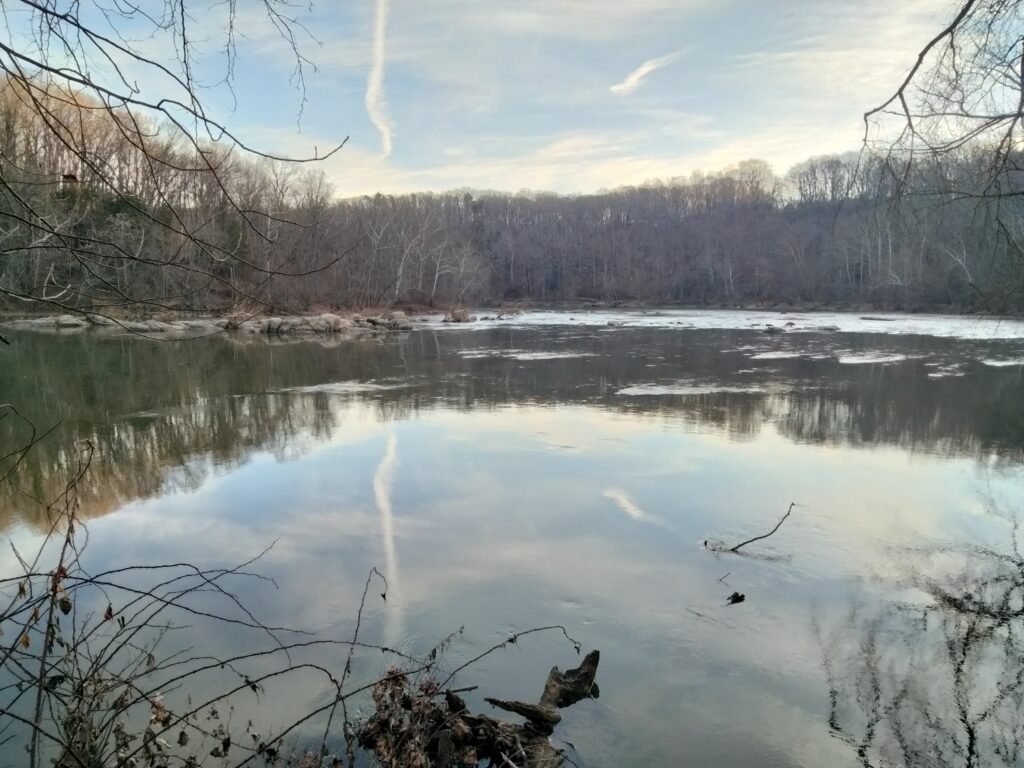
(Tim Talbott)
To accomplish his objectives, Hooker planned to push troops out on the various road networks that radiated south and east from Chancellorsville. Meade, now in charge of the Fifth Corps, would lead two divisions advancing on the River Road toward Banks’ Ford, while another division moved west on the Orange Turnpike (modern Route 3). Maj. Gen. Henry Slocum’s Twelfth Corps would march south and then east on the Orange Plank Road (modern Old Plank Road). If all went well, the Army of the Potomac would soon be free of the Wilderness, which would increase the large force’s ability to maneuver and cooperate easier.
The most recent BMI-provided information that Hooker had was that Jackson’s corps was still near Fredericksburg. The army commander therefore believed he only faced the two divisions that Longstreet had left with Lee, those of Maj. Gen. Richard H. Anderson and Maj. Gen. Lafayette McLaws. Wishing for some confirmation on that information, Hooker sent Brig. Gen. Gouverneur K. Warren, then serving as Hooker’s chief engineer, to ride forward on the Orange Turnpike and see what he could learn. Warren soon returned and explained that the Confederates were constructing earthworks across the road about three miles ahead, which led Hooker to believe that the previously received BMI information was still correct. So, at about 10:30 am, Hooker ordered forward his three-headed advance.
Meade’s two divisions under Brig. Gen. Andrew Humphreys and Brig. Gen. Charles Griffin met no opposition but moved slowly as they marched along the rutted and muddy River Road toward Banks’ Ford. Almost to their target location, they heard heavy musket firing with the occasional punctuation of artillery to their right. Soon thereafter, a staff officer with orders reigned up, delivered instructions, and the column countermarched in the direction of Chancellorsville.
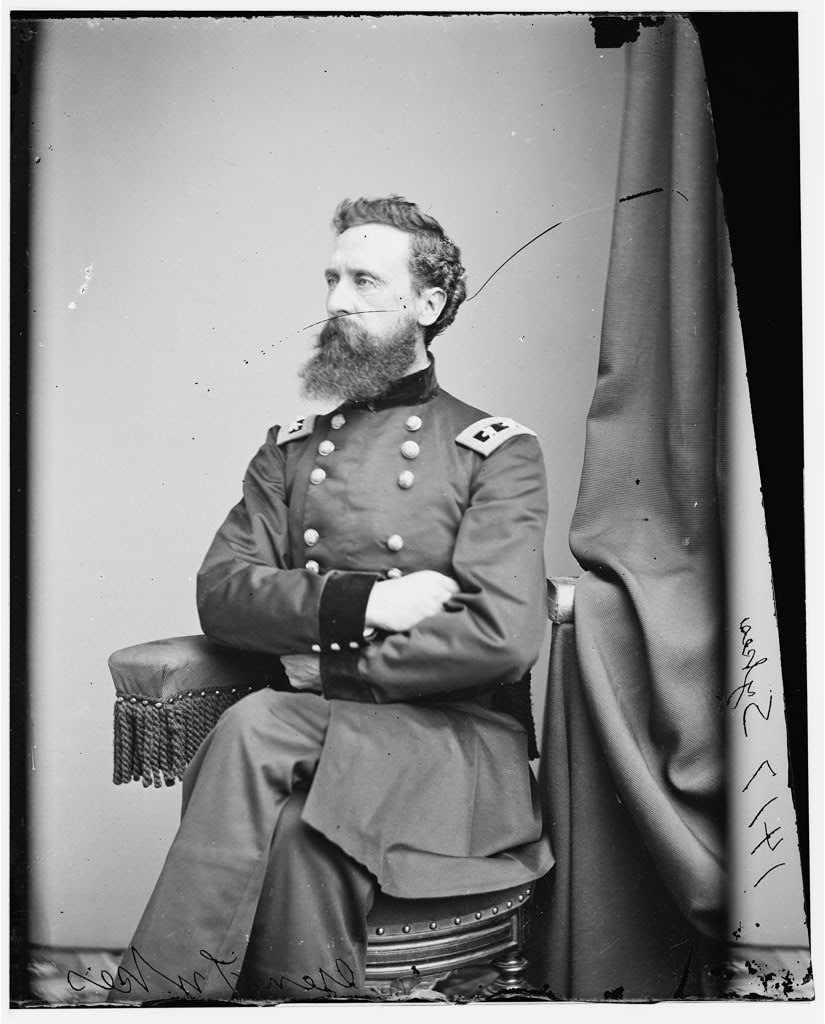
(Library of Congress)
On the Orange Turnpike, Maj. Gen. George Sykes’ Fifth Corps division marched east to meet whatever force was in his front. At about where Mott’s Run ( Lick Run) crosses the road, Sykes had his lead brigades, which were composed of U.S. Regular infantry regiments, form a battle line on the left side (north) of the turnpike. There they met Brig. Gen. William Mahone’s brigade of Anderson’s division. A couple of Regular regiments from Col. Sidney Burbank’s brigade battled Brig. Gen. Paul Semmes’ brigade of Georgians from McLaws’ division on the right side (south) of the road. The fight escaladed quickly as McLaws ordered more brigades in as support.
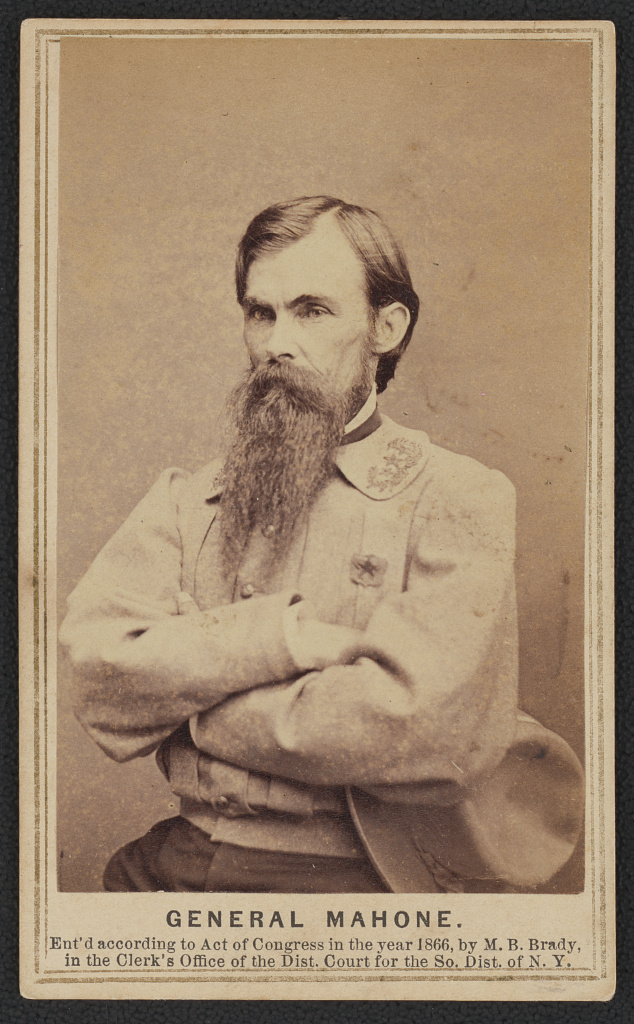
(Library of Congress)
Had Meade been able to communicate better with Sykes, or even Hooker back at Chancellorsville, he could have perhaps been in an excellent position to flank the Confederates facing Sykes. But, obeying Hooker’s orders to the letter, Meade remained unengaged on May 1.
In serious danger of being flanked on both sides, and with only his remaining brigade in support at present, a worried Sykes sent Warren back to explain the Orange Turnpike fighting situation to Hooker. Maj. Gen. Hancock’s Second Corps division was supposed to be Sykes’ reinforcements but were not yet quite at hand. Hooker sent Warren to Sykes with orders to fall back to Chancellorsville.
Meanwhile, a bit further south along the parallel running Orange Plank Road, Slocum’s two divisions encountered Confederate pickets. Slocum deployed into battle formation and pushed ahead through that part of the Wilderness to the Alrich Farm. There he battled a mixture of Anderson’s division and units from Jackson’s corps that had arrived on the scene.
To get information on what was happening on this part of the battlefield, Hooker sent an aid to monitor the situation and report back. Finding that Slocum had not progressed as far as Hooker had hoped at that point and was now engaged with what appeared to be more troops than just Anderson’s division, the staff officer sent his report back to Hooker at Chancellorsville.
All of this news of Confederate resistance, combined with telegraphic messages from Hooker’s chief of Staff, Daniel Butterfield, who was located in Falmouth and reporting that Jackson was no longer at Fredericksburg, suddenly deflated Hooker previous confidence. Hooker, as he did with Meade and Sykes at nearly the same time, also recalled Slocum.
Maj. Gen. Darius Couch, who commanded the Second Corps, was surprised that Hooker ordered the Fifth and Twelfth Corps forces to withdraw to Chancellorsville. Meade and Slocum were astonished as well. Years later, Couch remembered that he had been with Hooker less than a month before when President Lincoln reviewed the army and afterward had a private conversation with the two officers. Lincoln, as he was set to leave, advised Hooker and Couch, “I want to impress upon you two gentlemen in your next fight, put in all of your men.”
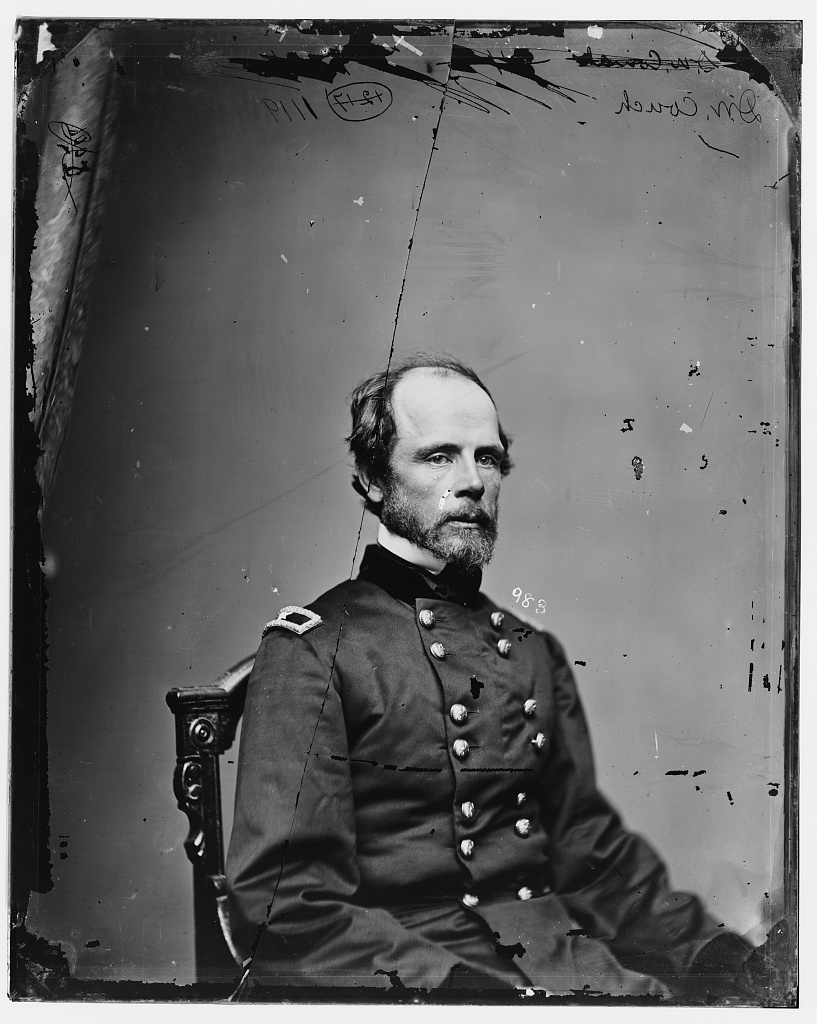
Couch commanded the Second Corps during the Chancellorsville Campaign.
(Library of Congress)
That obviously did not happen on May 1, as the Eleventh Corps was not ordered forward, and only Hancock’s division from the Second Corps was available to support Sykes by the end of the fighting along the Orange Turnpike. Maj. Gen. William French’s Second Corps division had arrived at Chancellorsville but was not engaged. Additionally, although Hooker thought he was only going to meet limited resistance on May 1, based on the intelligence at hand, he probably should have had a contingency plan in place to deal with increased enemy numbers. Having the Third Corps on site and at hand earlier on May 1 to serve where needed as reinforcements would have been a great start.
Much discussion has followed Hooker’s May 1 decision. Historians have differing opinions but most all agree that Hooker surrendering the offensive initiative to Lee set a bad tone for the remainder of the campaign and was a clear mistake. Couch agreed with this line of thinking. In his contribution to the “Battles and Leaders” series published by Century Magazine, Couch explained that after reporting to Hooker back at Chancellorsville on May 1, Hooker said, “It is all right, Couch, I have got Lee just where I want him; he must fight me on my own ground.” Couch thought otherwise. “I retired from his presence with the belief that my commanding general was a whipped man,” Couch explained. Much of the Army of the Potomac felt the same way.
The Mine Run Campaign
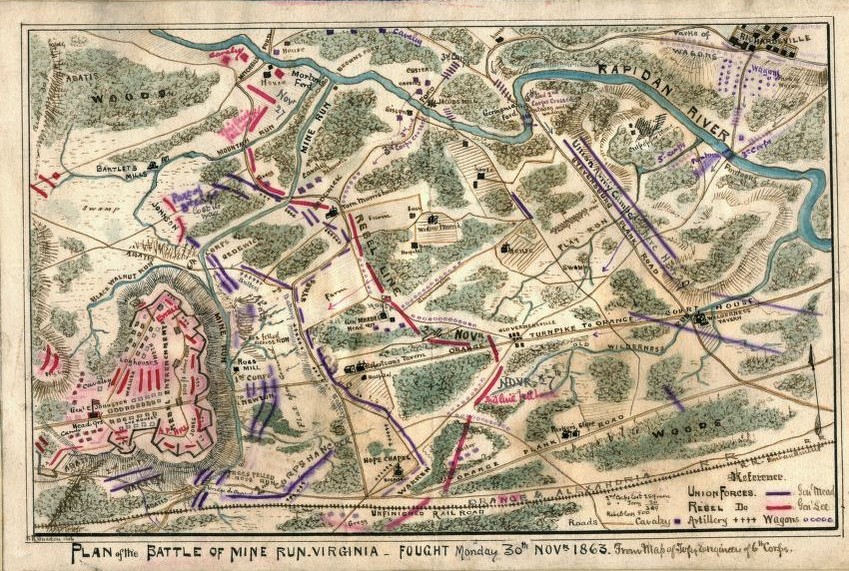
By Robert Knox Sneden
(Library of Congress)
During the fall of 1863, as things moved toward conclusion in the fighting at Chattanooga in the Western Theater, maneuvers were afoot, too, in central Virginia by Maj. Gen. George G. Meade and the Army of the Potomac. With Meade receiving news via telegraph on November 25 that Maj. Gen. Ulysses S. Grant had won a resounding victory in Tennessee, personal and political pressure increased for Meade to try to mirror Grant’s success and do some damage to Gen. Robert E. Lee’s Army of Northern Virginia before going into winter quarters.
In the fall of 1863, see-saw maneuvering between Meade and Lee developed into a fight at Bristoe Station on October 14, which prompted Lee to fall back to his position along the Rappahannock River. The two armies were at each other again less than a month later at Rappahannock Station (November 7), where the Federals used a nighttime bayonet attack to break the Confederate defenses and push the southerners into Orange County while Meade’s army remained in Culpeper County.
As President Lincoln proclaimed a National Day of Thanksgiving on November 26, 1863, Meade was on the move to try to get behind the Army of Northern Virginia and defeat each of Lee’s two corps before they could unite. Longstreet’s corps was still west of the Appalachian Mountains. However, the Potomac army was much reduced from a few months back, too, as both the Eleventh and Twelfth Corps had been sent to Tennessee to help there.
Intending to cross the Rapidan River at several different fords, all Federal corps traversed from their Culpeper County camps unopposed but not without drama due to issues partly caused by poor weather. Recent rains had initially delayed Mead’s move, but when it started it had also softened the narrow dirt roads making them quagmires and slowing the rate of travel. The heavy precipitation had also swollen the Rapidan, taking the stream beyond its normal banks. The weather, however, was not to be the sole root for the army’s delays. The human element also played a huge factor.
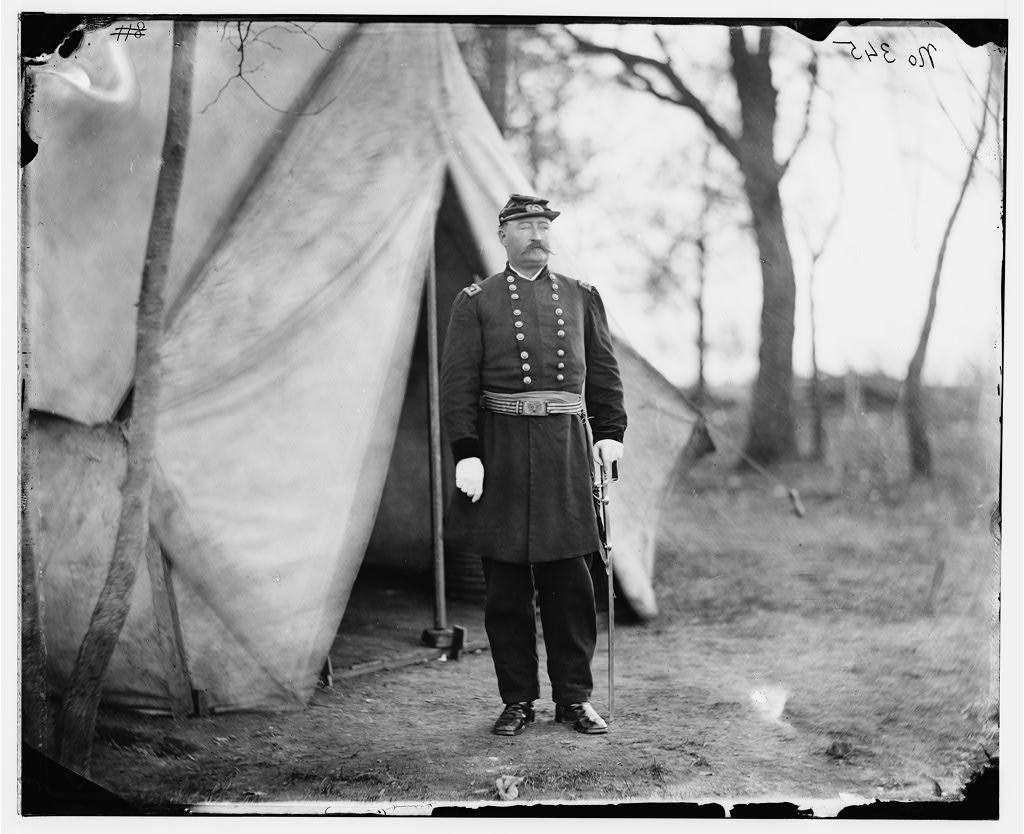
French commanded the Third Corps during the Mine Run Campaign.
(Library of Congress)
Meade’s plan called for the convergence of the various corps of his army at or near Robinson’s Tavern on the Orange Turnpike at Locust Grove, hopefully before dark on November 26. The Third Corps, commanded by Maj. Gen. William French, finally reached the Rapidan River at Jacob’s Ford at about noon on November 26. After bringing up the pontoon boats, men from the 11th New Jersey boarded and went across the stream to brush away Confederate cavalry. Then, pontoon bridge-building engineers went about their work, but soon they perceived they were short by one boat to complete their shore-to-shore span. The unexpected shortfall ate up more time to construct a support structure in lieu of the missing boat. Finally crossing at about 4:00 pm and with Gen. John Sedgwick’s Sixth Corps right on his heels, French was still well short of the target location at Robinson’s Tavern. Yet even more mistakes awaited.
After French found that his artillery and wagons were not able to make it up the steep road along the Rapidan’s south bank, he had them go back and cross downstream at Germanna Ford, where Warren’s Second Corps had crossed. Warren, too, had experienced a pontoon bridge shortfall. Mead’s plan to have his corps near the Robinson’s Tavern area before dark on November 26, was falling apart, so he had to recalibrate and set the reunion for the morning of November 27. The Army of the Potomac’s element of surprise was rapidly slipping away, if not already gone. Would the following day finally close the book on the army’s blunders?
The distance from Jacob’s Ford to Robinson’s Tavern was only about five miles. However, by 11:00 am on November 27, French’s Third Corps had still not arrived. Meade sent French a couple of desperate messages informing him of Warren’s growing situation along the Orange Turnpike.
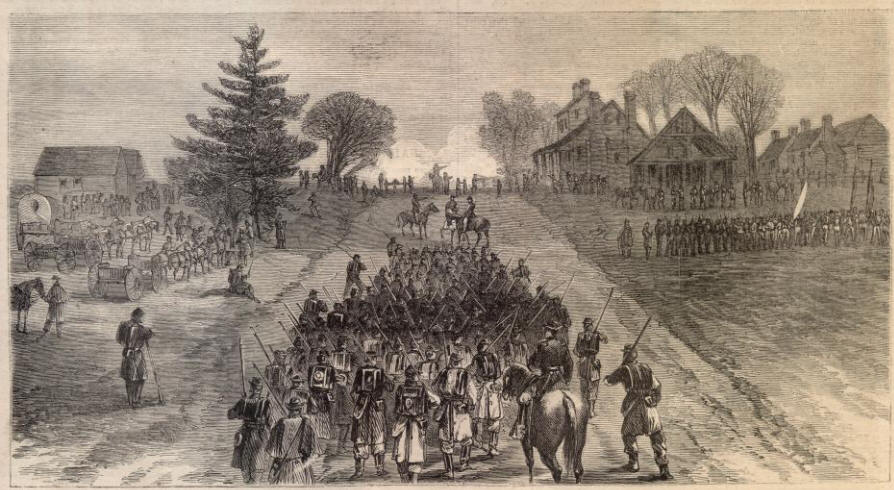
Robinson’s Tavern is show in the right background.
Sketched by Alfred Waud
(Harper’s Weekly, January 2, 1864)
The issue causing the delay was a fork in the road and then determining which way to go. Meade’s chief of staff, Maj. Gen. Andrew Humphreys, recalled years later that in the campaign’s planning meeting that French was specifically “cautioned to take the left hand road at a certain Morris’s [house], half-way to the tavern, where the road forks, as the left hand road led to Robertson’s [sic] Tavern. . . .” Whether or not it was stated so clearly at the time is difficult to determine. If so, Brig. Gen. Henry Prince, who led the Third Corps approach, apparently did not receive the information from French and halted the column at the fork. Or, perhaps he had other information that made him pause and consider his options. Prince sent out cavalry on each fork to determine what was ahead. The horsemen from the right fork returned noting that Confederate cavalry blocked that road. The road to the left, though, was longer and would delay the corps, which was already late in getting to Robinson’s Tavern. What to do? Finally, French rode forward to see what was happening, but apparently never made personal contact with Prince despite being within near proximity. Possibly under the influence of alcohol at the time, French instead chose to communicate with Prince via courier instead of seeking out his subordinate. French and Prince’s rapidly deteriorating relationship was not improved by the numerous errors experienced so far in the campaign and would not get better that day.
French finally ordered Prince to take the right-hand road. Prince started but was halted by French who was now unsure. Prince finally rode to French to clearly communicate the state of things and received the go ahead, but to also seek out Brig. Gen. Joseph Carr and his division for reinforcement if needed. Prince went to Carr, who said his orders were to follow Prince’s division. More time was wasted for Prince to send a note to French who replied to proceed. But French stopped Prince yet again to position Carr as support on Prince’s left. Over four hours, perhaps, five, had been spent due to terrible preparation, bad communication, and ill feelings.
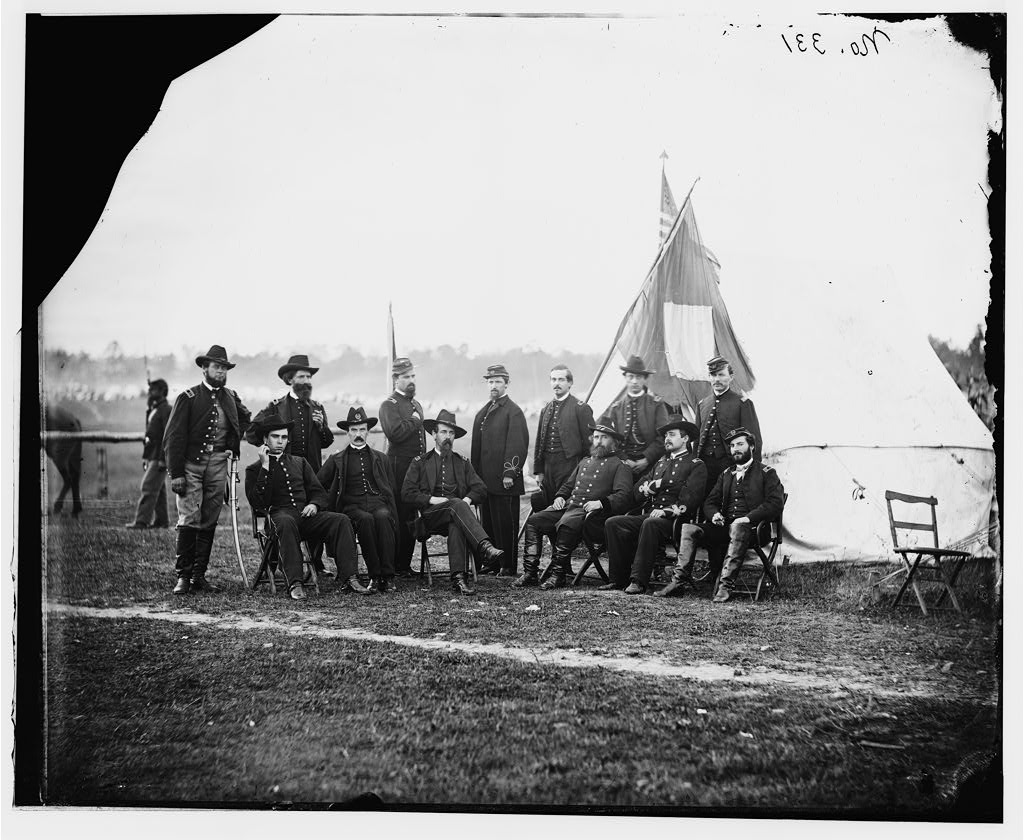
Gen. Prince is seated third from the right.
(Libary of Congress)
As the Third Corps finally started forward, their pickets ran into infantry pickets from Maj. Gen. Edward Johnson’s division of Lt. Gen. Richard Ewell’s corps, which was moving along the Raccoon Ford Road toward Locust Grove. The shooting escalated into a nasty scrap at the farm of William Payne that lasted past dark.
Meade’s hope of catching the Army of Northern Virginia off guard, and his plan for the campaign of attacking Lee’s divided corps with a unified force was now off the table. Meade now had to see if he could still salvage a measure of success from the campaign. It was not to be.
Conclusion
As the above examples from Fredericksburg, Chancellorsville, and Mine Run show, missteps could prove costly. Whether that price was a lost opportunity, lost ground, a lost battle, or lost lives, battlefield mistakes could prove ruinous to more than just the reputations and careers of those who committed them.
Sources and Recommended Reading
Chris Mackowski. The Great Battle Never Fought: The Mine Run Campaign. Savas Beatie, 2018.
Francis Augustin O’Reilly. The Fredericksburg Campaign: Winter War on the Rappahannock. Louisiana State University, 2003.
Stephen W. Sears. Chancellorsville. Houghton Mifflin Company, 1996.
Parting Shot
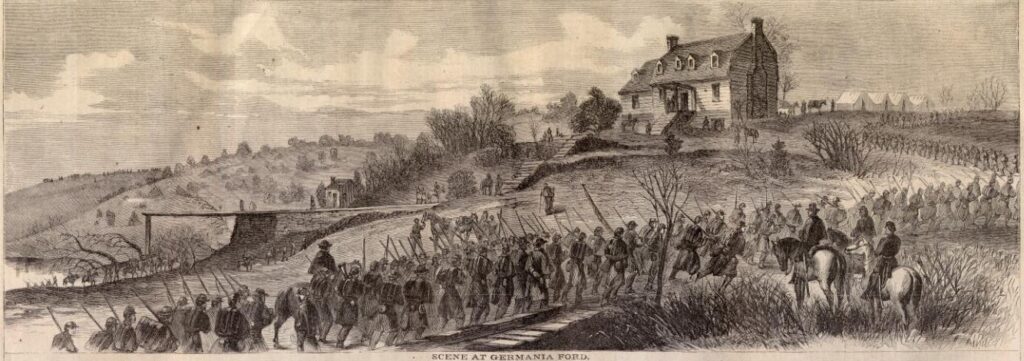
This woodcut shows Army of the Potomac troops at Germanna Ford marching back to their Culper County camps following the fruitless Mine Run Campaign.
(Harper’s Weekly, January 2, 1864)
NEWSLETTER SIGN-UP
Join our community! Sign up for our newsletter to receive exclusive updates, event information, and preservation news directly to your inbox.
STAY UP TO DATE
Celebrating 30 Years and Over 2,000 Acres of Battlefields Preserved