
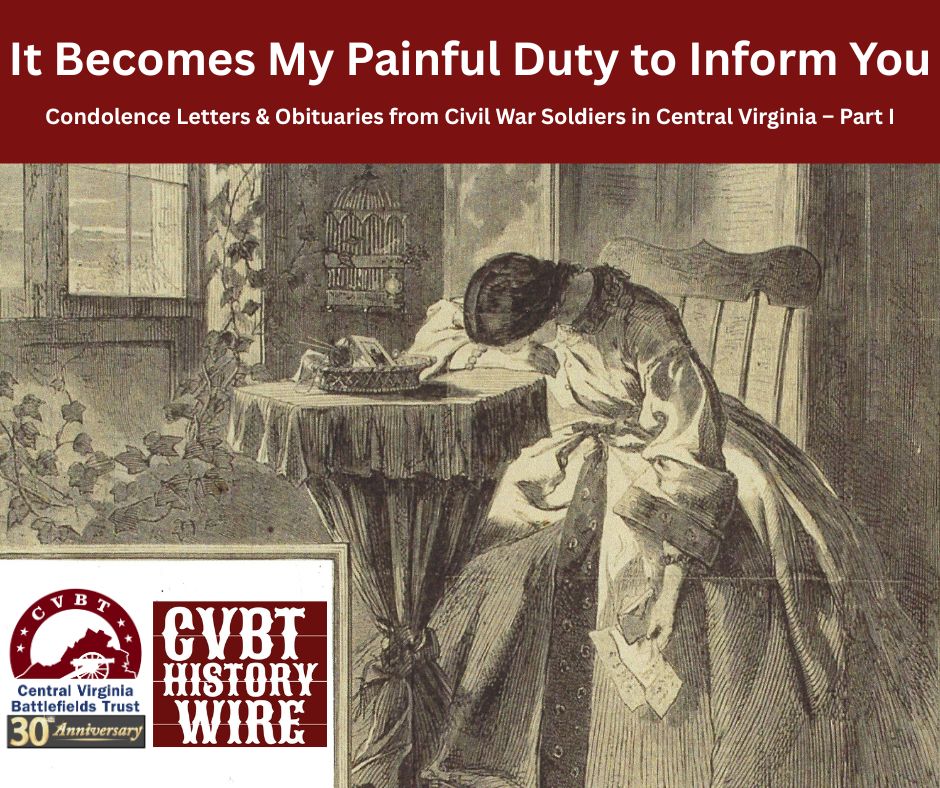
Woodcut from sketch by Winslow Homer
Condolence letters from the battlefront brought both grief and comfort to the home front.
(Harper’s Weekly, June 17, 1862)
Introduction
Wounded in the right knee during the Irish Brigade’s charge on Marye’s Heights at Fredericksburg, the 63rd New York Infantry’s Corp. Patrick Scanlan winced in pain as the fighting went on. Eventually removed from the battlefield and transported to Lincoln Hospital in Washington, surgeons removed Scanlan’s leg above the knee. Complications from the wound resulted in his death on January 14, 1863. Someone at the hospital named William Duffie, who was perhaps a nurse or maybe a chaplain, took the time to pen a four-page letter to Scanlan’s wife, Ann, who lived in New York City, about her husband’s passing.
Duffie opened, “Dear Madam- it [ha]s become my very painful duty to inform you that your husband has just breathed his last.” Duffie attempted to provide words of comfort and used religious tones to offer his sympathies: “I know how great will be your grief upon reception of this sad news but it is the will of God that it should be so and you must try and bear the bereavement with resignation, knowing that it is not for you to question His right to do with His own as He sees fit: ‘The Lord gave and the Lord taketh away: blessed be the name of the Lord!’” And although Duffie admitted he was not a Catholic, he let Ann know that Corp. Scanlan had received his last rites.
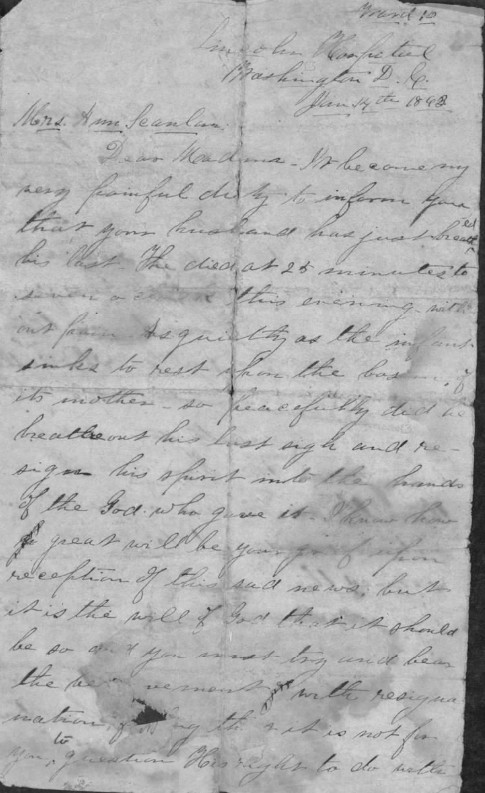
(National Archives and Records Administration)
In his missive, Duffie noted that Scanlan had recently received a letter from Ann and that Duffie had offered to write a reply, but the corporal felt he would wait and see if his condition improved. However, the day before his death, he told Duffie that “After I am dead, write to my wife and tell her that I died a natural death in bed, having received the full benefits of my church. Say that I felt resigned to the will of God and that I am sorry I could not see her and the children once more. That I would have felt better in such a case before I died. It is the will of God that it should not be so, and I must be content to do without.” Knowing her husband expressed these sentiments must have provided at least a measure of comfort to Ann. Then, at the end of the letter, perhaps knowing that Ann was left to raise her three surviving children alone and that every resource would be needed, Duffie turned to more practical matters by explaining, “His pay amounts to some 6 1/2 months[,] not having received any since the 1st of July [1862]. This of course you are entitled to draw and you can do so by getting some friend to assist you, [who] understands about it. The few things in this letter are all his personal effects. The rest of his things letters & c. he said to burn—which will be done.”
With so many deaths occurring during the Civil War, thousands of similar letters were sent during the conflict from battlefields, camps, and hospitals, written by soldiers’ officers, comrades, and caregiving friends.
Americans from all sections had idealized visions of how one should pass from life to death. They felt one should leave this world secure in one’s faith and with the promise of an awaiting eternal life. Additionally, at the hour of death, a dying person should be surrounded by loved ones whose care eased the transfer of earthly existence to the afterlife. This was a Good Death. Naturally, the conditions imposed by war disrupted these ideals. Dying far from home, often in the company of strangers and with the absence of friends, was disturbing to contemplate from afar and even more so to experience, whether as victim, loved one, or correspondent.
In effort to mitigate some of the physical and emotional distance between the dearly departed and those who loved them, condolence letters help bridge the divide and offer reassurance that their soldier died bravely, faithfully, and spiritually secure. Such letters also often told those at home how much the fallen soldier was loved and appreciated by his comrades. As historian Drew Gilpin Faust explains, “These letters sought to make absent loved ones virtual witnesses to the dying moments they had been denied, to link home and battlefront, and to mend the fissures war had introduced in the fabric of the Good Death.”
In this month’s CVBT History Wire post we will explore some condolence letters sent to comfort those who lost soldiers on the battlefields of Fredericksburg, Chancellorsville, and Mine Run.
The Battle of Fredericksburg
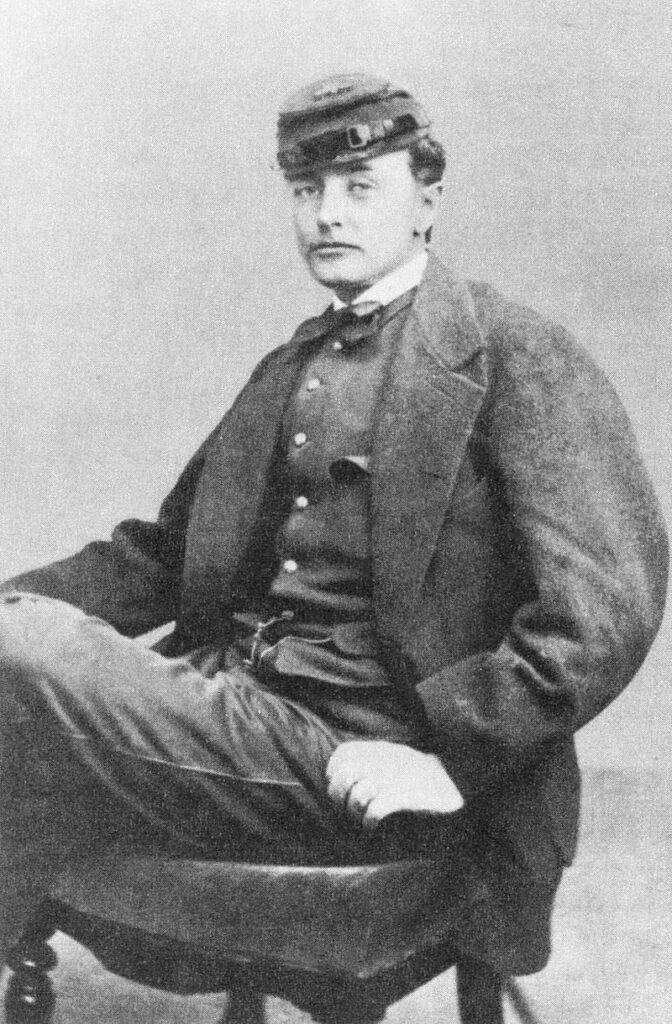
Abbott sent a condolence letter to the mother of one of his soldiers who died at Fredericksburg.
(Courtsey Wikipedia)
Condolence letters often came from deceased soldiers’ company commanders. Feeling a sense of obligation to let those back home know about the death of a loved one is a responsibility that many officers took seriously. Writing from the Federal camps in Stafford County, Capt. Henry Livermore Abbott of the 20th Massachusetts wrote a brief letter on December 17, 1862, to the mother of Pvt. James Briody, one of his soldiers killed at Fredericksburg six days earlier during street fighting. Addressing her as “Dear Madam,” Capt. Abbott explained, “I don’t wish to address to you the common words of condolence merely—I feel, myself, as well as you, too much the greatness of the loss.” Abbott then shared a personal connection he had developed with her son from the short time that they had spent together: “The first time I saw James Briody, I was struck with his honest, manly, cheery face. I found him to be one of the two best of all the recruits who joined my company,” Abbott noted. “It gave me a great pang when I saw him lying dead in the street. He was killed instantly,” he informed her. Knowing that most recipients of such letters wished to hear about their soldier’s remains, Abbott included that “A board with his name on it, marks his grave in a vacant lot in Fredericksburg.” He then closed, “Believe me that I sympathize most deeply with you, in your awful loss.” As a bit of a helpful postscript, the captain included, “The pay due him can be got by applying through a lawyer to the [War] dept at Washington.”
Henry Ropes, a fellow captain in Abbott’s 20th Massachusetts, who commanded Company K, likewise penned a condolence letter to James Donnelly, the father of 20-year-old Pvt. John Donnelly, who was also killed on December 11, 1862. Written on December 20, Capt. Ropes, as was common, called writing such correspondence his “painful duty.” Instead of opening with a touching introduction as Abbott had in his condolence letter to Ms. Briody, Ropes got right to the facts, telling Mr. Donnelly that his son “was instantly killed by a musket ball which passed through his head during the desperate fight in the streets of Fredericksburg VA . . . He must have instantly died without suffering.” Knowing that Pvt. Donnelly did not suffer perhaps provided a measure of comfort to his family, or maybe Capt. Ropes just thought it would. Like Capt. Abbott also had with Ms. Briody, Ropes wanted Donnelly’s father to know that his son received a burial and that that solemn duty was not left to the enemy. “His body was buried near the spot where he fell, by his friends and the place marked by a head board bearing his name, company & regt.,” Ropes informed the grieving father. Unlike Abbott’s letter about Pvt. Briody, Ropes’ praise for Pvt. Donnelly was saved for the letter’s end. “Your son was a brave and faithful soldier and he fell bravely fighting with his Regt. A true soldier’s death. Please accept my dear Sir my sincere sympathy for you & for your family in this deep affliction. . . ,” Ropes closed.
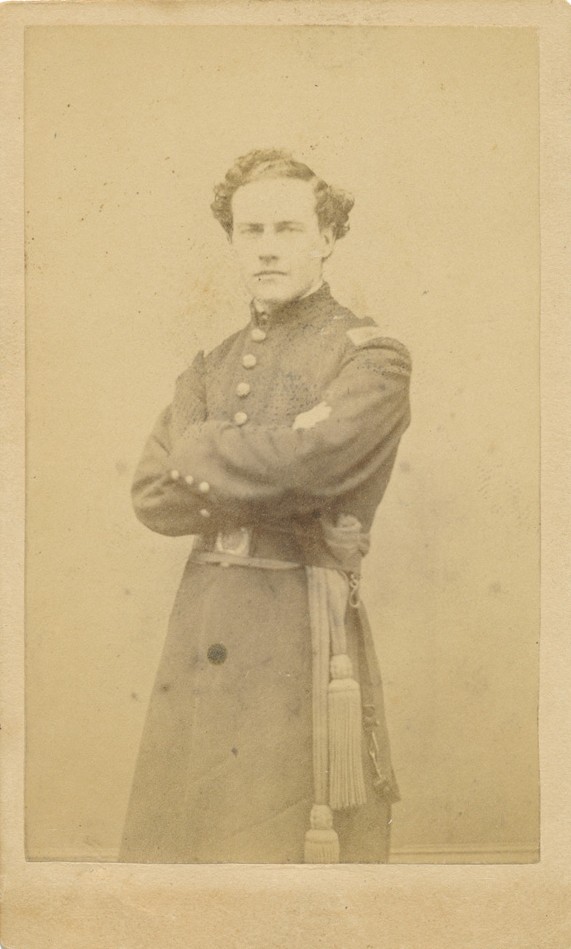
After Lt. Dehon was killed near the Richmond, Fredericksburg, and Potomac Railroad tracks while attempting to deliver an order, his comrades sent letters of condolence to his father.
(Courtesy of The Horse Soldier)
Lt. Arthur Dehon, a young officer on Maj. Gen. George Meade’s staff, was killed at the Battle of Fredericksburg while delivering an order along the Richmond, Fredericksburg and Potomac Railroad tracks near Prospect Hill. Writing to Dehon’s father, William, surgeon Jedediah H. Baxter penned a heart-felt letter hoping to ease Mr. Dehon’s grief, if just a bit. Lt. Dehon and Baxter previously served together in the 12th Massachusetts Infantry. Baxter explained, “I must write and assure you that in myself you have one sincere mourner, and who, if he were able, would comfort you in this your deep affliction.” The close bond formed between the two soldiers comes through as Baxter continued that, “Your son was my friend! I welcomed him in to our regiment last winter, have watched with pride his brave career. Everyone loved him, and in this war of jealous feeling no one for a moment withheld the name he had so justly won; ‘a brave, kind hearted man.’” Feeling his words might actually prove insufficient at this time of sorrow, he closed with, “I cannot attempt to offer you consolation; the grief of a father’s heart is too sacred.”
William Dehon received numerous condolence letters from his son’s comrades and friends. Writing from Pittsburgh almost three months after the Battle of Fredericksburg, Capt. Thomas Sweringen, who served on the staff of Brig. Gen. Conrad F. Jackson, explained that “On the battlefield at Fredericksburg I found the body of your son, the late Lt. Dehon, and had it moved to the side of my Genl. (Jackson) who was killed about the same time. I took from his person all that I could conveniently carry, but being wounded & taken prisoner shortly after I regret to say everything except a gold watch & chain & two hdkf’s [handerchiefs] were lost or stolen.” Capt. Sweringen stated that he “was released a short time ago, & have not [previously] ascertained your address to which I have this day forwarded (express) the articles mentioned.” Swearingen closed by explaining his connection with Lt. Dehon, describing Dehon’s admirable traits, and offering sympathy: “I knew your son but a short time, sufficiently long, however, to become very much attached to him, & to learn his many manly virtues. He was brave, generous, & patriotic, & fell in the discharge of his duty. Although a stranger, I cannot withhold an expression of my sympathy for you in this bereavement.”

This photograph shows the approximate area of where the 54th and 57th North Carolina from Evander Law’s brigade attacked (left to right) across the railroad tracks.
(Tim Talbott)
The fighting on the south end of the Fredericksburg battlefield that claimed Lt. Dehon’s life also witnessed the death of a Confederate soldier whose family received a relative’s condolence letter. On December 15, James Jones, chaplain for the 3rd Arkansas Infantry, wrote to his uncle John Long about the death of Long’s son and Jones’ cousin, Pvt. Benjamin Long, who served in the 57th North Carolina. Pvt. Long was killed fighting in Gen. Evander Law’s brigade near the Richmond, Fredericksburg, and Potomac Railroad tracks just a few hundred yards north of where Lt. Dehon fell and now known as the Slaughter Pen Farm. Chaplain Jones’ letter must have been shocking for Mr. Long to read, particularly if he had not already received the news of his son’s death. “It is my painful duty to write to you a few lines informing you of the Death of your son, cousin Benjamin N. Long,” wrote Chaplain Jones. Providing additional information on Pvt. Long’s death and burial, the chaplain explained, “He was killed in a charge last Saturday near the Rail Road. I happened to find him yesterday evening (Sunday) just as they were going to bury him, so I got a board and cut his name on it, at his head and feet. He was shot in the head and killed immediately, so the poor fellow died I reckon without much pain.” After giving some details about army movements, Jones concluded, “Oh! May the Lord save us, and put a stop to such cruel horrors. You may know that I was sorry for poor Ben, when I found him; but we can’t help these horrors, and must try to be resigned to the will of God.”
Capt. Alexander Laurie of the 121st Pennsylvania Infantry’s Company B had the sad duty of telling the wife of 1st Sgt. Edward Sheerer about her husband’s death at Fredericksburg. Capt. Laurie opened his brief letter by mentioning that her December 19 letter “came duly to hand.” One wonders if she had sent a letter to her husband not yet knowing he had passed and then the letter was forwarded to Capt. Laurie, or if she had written to Laurie requesting information about her husband’s death after already receiving word by another means. With the short 6-day duration between the sergeant’s death and Laurie’s writing, it was likely the former. Regardless, the captain went on to write about how Sgt. Sheerer died in battle and how much he thought of him: “It becomes my sad duty to inform you that your husband fell in the battle of Fredericksburg, mortally wounded, almost instantly killed, for he never spoke after he was shot. He died in a very few minutes afterwards, and we buried him the next day.” Laurie added a personal note by stating, “He was at my side when he fell; he fought bravely, and was the best soldier in the regiment. All loved him who knew him.”
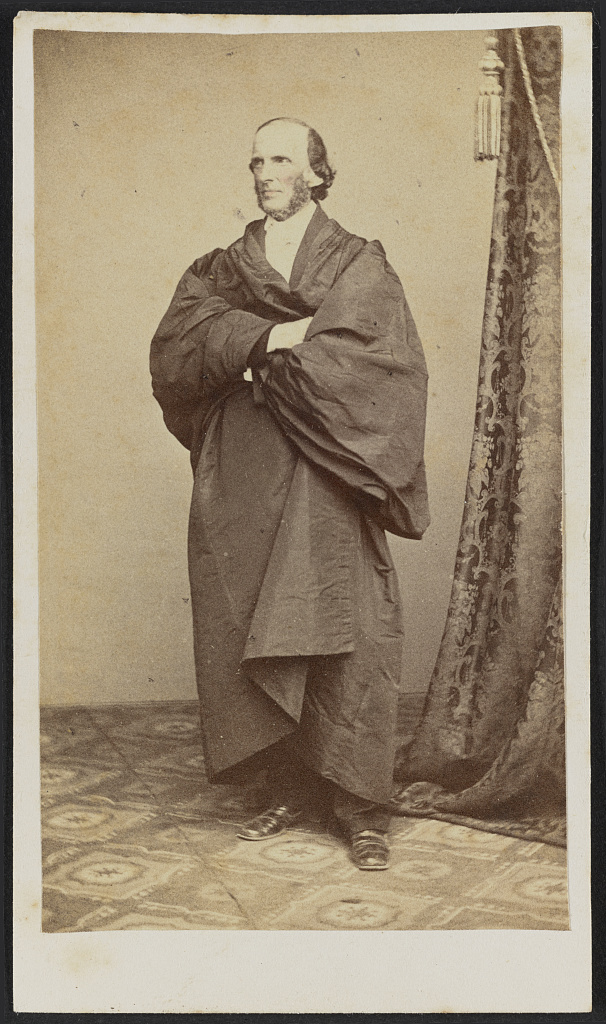
Rev. Channing served as the chaplain at the Stanton Hospital in Washington DC.
(Library of Congress)
During the Battle of Fredericksburg, Sgt. James McLaughlin of 28th Massachusetts Infantry, a regiment in the famous Irish Brigade, received a shell wound to his arm. Evacuated from the battlefield, he eventually ended up at Stanton Hospital in Washington D.C. Apparently, the wound did not heal well and resulted in the Sgt. McLaughlin’s death on December 22, 1862. William Henry Channing, chaplain at the hospital, wrote to McLaughlin’s brother-in-law Peter Kirlan two days later to inform Kirlan of the sad event. “You will be pained to learn that your friend . . . died on the 22nd inst. of mortification of the arm . . . .,” the chaplain explained. “All was done for him that was possible under the circumstances. His life could not be saved. Will you communicate to his friends the sad intelligence that this brave man died, as became a gallant soldier, and let the knowledge of his heroic fidelity to duty be their consolation.” On December 28, Peter Kirlan traveled to Washington and retrieved Sgt. McLaughlin’s buried body, taking it home to Massachusetts. McLaughlin was survived by two children, 14-year-old Mary, and 8-year-old George, who were now orphans, their mother having died in 1858.
Another Irish Brigade soldier killed at Fredericksburg, the 88th New York Infantry’s Pvt. Thomas Healey, was the subject of a condolence letter written on January 10, 1863, by Company D’s Lt. John Foley. Lt. Foley penned it in reply to Joseph Cahill’s request concerning information about Healey’s death. Foley called Healey “A brave and fearless soldier,” and “a sterling and honest man.” Explaining that Healey’s death was “deeply regretted by his few surviving comrades,” Foley added that Healey’s passing was lamented “by none more so than by” Foley himself. As a postscript, he added, “The poor fellow was heroism on the battle field.”
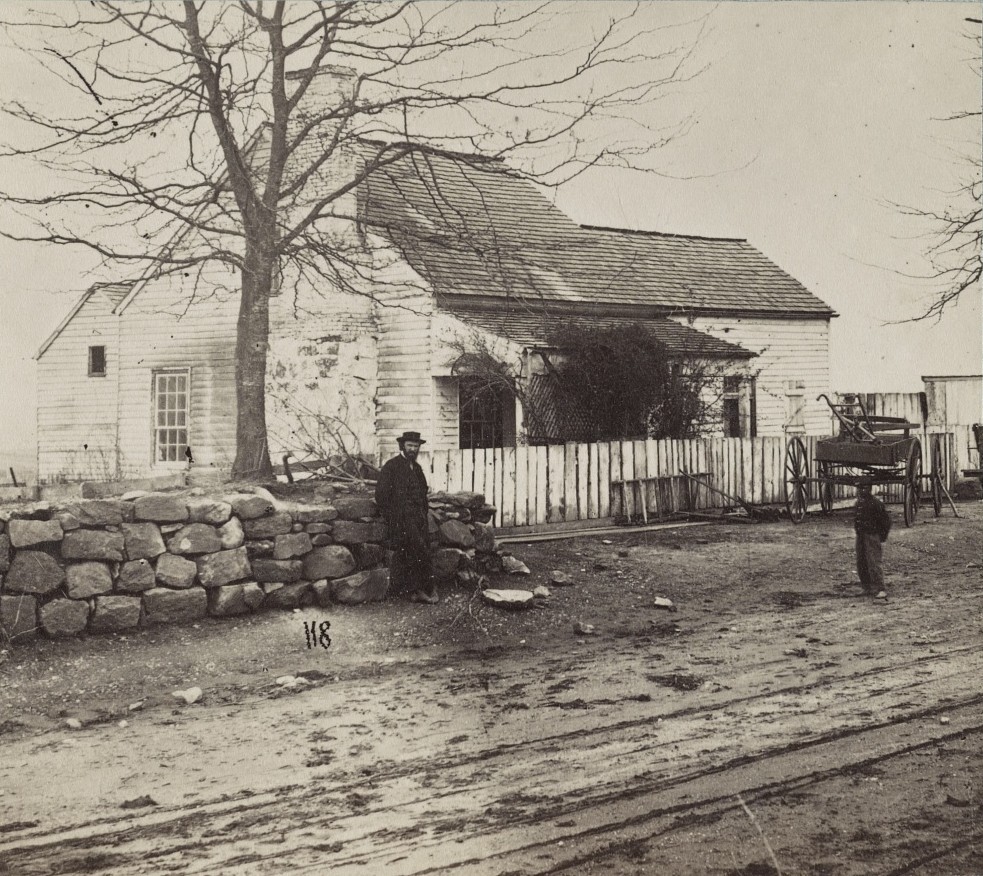
The Stephens house stood just a few yards south of the Innis House along the famous Sunken Road and Stone Wall below Willis Hill and Marye’s Heights.
(Library of Congress)
Fighting opposite of Sgt. McLaughlin, Pvt. Healey, and their Irish Brigade comrades, Brig. Gen. Thomas R. R. Cobb’s Georgia regiments battled from behind the famous Stone Wall in the Sunken Road below Marye’s Heights. During the fighting, a shell slammed through the Stephens house and a piece of it hit Gen. Cobb in the right leg doing significant damage. As he was carried from the field he told his men, “I am only wounded Boys, hold your ground like brave men.” After his removal, and then receiving medical attention at a safe distance, Cobb passed away that afternoon. On December 18, Gen. Robert E. Lee wrote to Gen. Cobb’s brother Howell Cobb, who was also a general then serving in Florida, to express his condolences. “I beg leave to express my deep sympathy in your great sorrow. Your noble and gallant brother has met a soldier’s death, and God grant that this army and this country may never be called upon again to mourn so great a sacrifice,” Lee penned. The Army of Northern Virginia commander then shared some sentiments about the deceased general’s honorable traits. “Of his merits, his lofty intellect, his accomplishments, his professional fame, and above all his Christian character, I need not speak to you who knew him so well. But as a patriot and soldier, his death has left a deep gap in the army which his military aptitude and skill render it hard to fill,” Lee wrote. Offering some details on his brother’s last fight, Lee explained that, “In the battle of Fredericksburg he won an immortal name for himself and his brigade. Hour after hour he held his position in front of our batteries, while Division after Division of the enemy was hurled against him. He announced the determination of himself and his men never to leave their post until the enemy was beaten, and with unshaken courage and fortitude he kept his promise.” To close, Lee offered, “May God give consolation to his afflicted family, and may the name and fame of the Christian statesman and soldier be cherished as a bright example and holy remembrance.”
Gen. Thomas R. R. Cobb was not the only Confederate officer who fell at Fredericksburg that Lee eulogized in a condolence letter. On January 8, 1863, Lee wrote to Sarah Alexander Lawton, the wife of Gen. Alexander Robert Lawton, and who was also the sister of Col. Edward Porter Alexander, about the death of her brother-in-law Capt. Edward Payson Lawton. Capt. Lawton was killed while leading a counterattack on the southern end of the Fredericksburg battlefield on December 13. “I acknowledge with many thanks your very kind letter of the 1st Inst,” Lee wrote. Lee explained that he appreciated Ms. Lawton’s letter and its kind sentiments. “For your prayers I am truly grateful, for in God above do I look for a happy issue out of all of our troubles, & trust that out of the Calamity of War which he has seen fit to visit upon us, he will bring great good,” the general added. “The misery it has brought upon your family is vividly revived by the arrival of your Sister [-in-law] from Alexandria with the body of her gallant husband. Who can realize her feelings, yet they are fully appreciated, & the whole Army Sympathizes in her grief! They know the merits of the lamented dead. They witnessed his bravery & devotion. They feel the loss to themselves & Country. May God in his mercy mitigate her Sufferings! I have only my sincere Sympathy to offer to her, to you, & the Genl. His sorrow must be indeed bitter. But he has the Consolation of knowing that what is done by our Heavenly father, is done for our good, that his noble brother died the death of the patriot Soldier, & is now at rest. Please present my kindest regards to him & your children.”
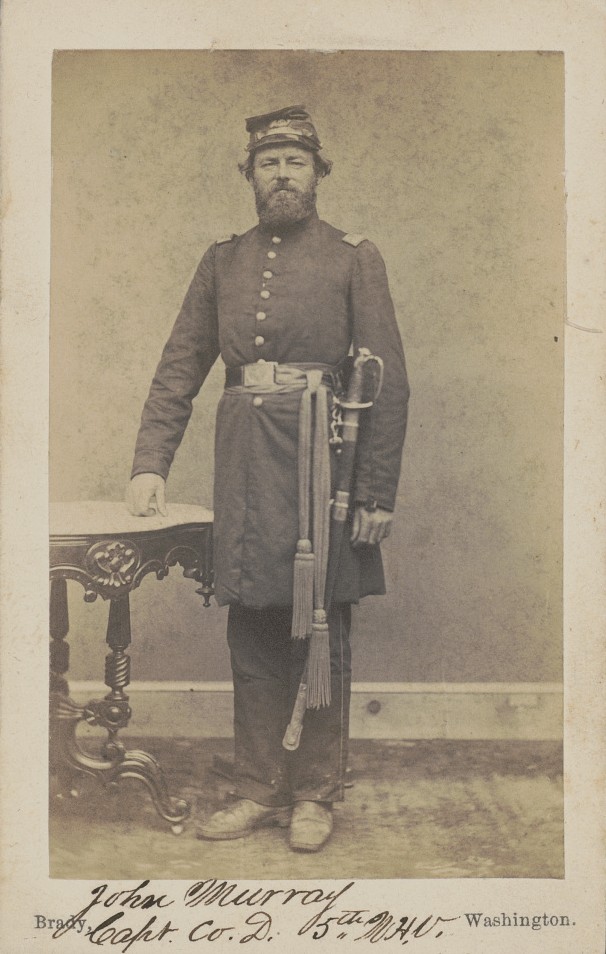
Col. Edward Cross of the 5th New Hampshire sent a condolence letter to Capt. Murray’s wife after the captain’s death at Fredericksburg.
(Library of Congress)
A veteran of the Mexican American War, Capt. John Murray of the 5th New Hampshire Infantry was among those in the Army of the Potomac’s Second Corps who fell killed as they changed toward Marye’s Heights. By the time the regiment passed the Stratton house, its color guard was decimated. Capt. Murray took up the national colors and within moments was killed after being hit in the head. Col. Edward Cross, the 5th New Hampshire’s commander, wrote a letter of condolence to Murray’s wife, Philadelphia. In it, Cross noted that “Certainly he had no superior in my regiment. Captain Murray was one of my best friends. I loved him for his sterling honesty, his frankness, and the dependence, which could always be placed in him; for his brave and soldierly character. He fell in the front rank of battle-killed instantly-probably suffering no pain. Accept madam, for yourself and children, my kindest sympathy, and if I can ever be of service to the family of my beloved comrade, do not fail to call on me.”
The Battle of Chancellorsville
Thousands of soldiers’ families on both sides received letters imparting bad news of different kinds. Some told of a soldier’s sickness or wounding, while others, as we’ve seen, delivered words of condolence about a departed comrade. In the days following the Battle of Chancellorsville, Capt. James Carrington, who led a battery of Virginia artillery, wrote to the mother of one of his soldiers, twenty-year-old Sgt. William Kenneth McCoy, informing her of her son’s wounding. Capt. Carrington explained that in all the confusion from the campaign he believed his previous letter was not sent and “therefore deem it proper to again announce that your son was seriously wounded in the recent engagement at Chancellorsville [May 3] while he was consciously discharging his duty in a most manly way. I sympathize most deeply with you in this sad affliction.” The captain noted that Sgt. McCoy’s “gentlemanly deportment” since their first acquaintance had “caused me to form a warm attachment for him.” Carrington also told Mrs. McCoy that he hoped her son would have a speedy recover, that he had been sent to Richmond for care, wished Sgt. McCoy would be home before she received this letter, and “If so, please give him my deepest sympathy.” Did Capt. Carrington perhaps know that the sergeant was wounded much worse than he indicated in his letter in effort to relieve some of Ms. McCoy’s anxiety? His letter’s content and tone written more in the mood of a condolence letter than an injury report make it seem so. Sadly, Sgt. McCoy died at the home a family friend in Richmond on May 19, 1863.
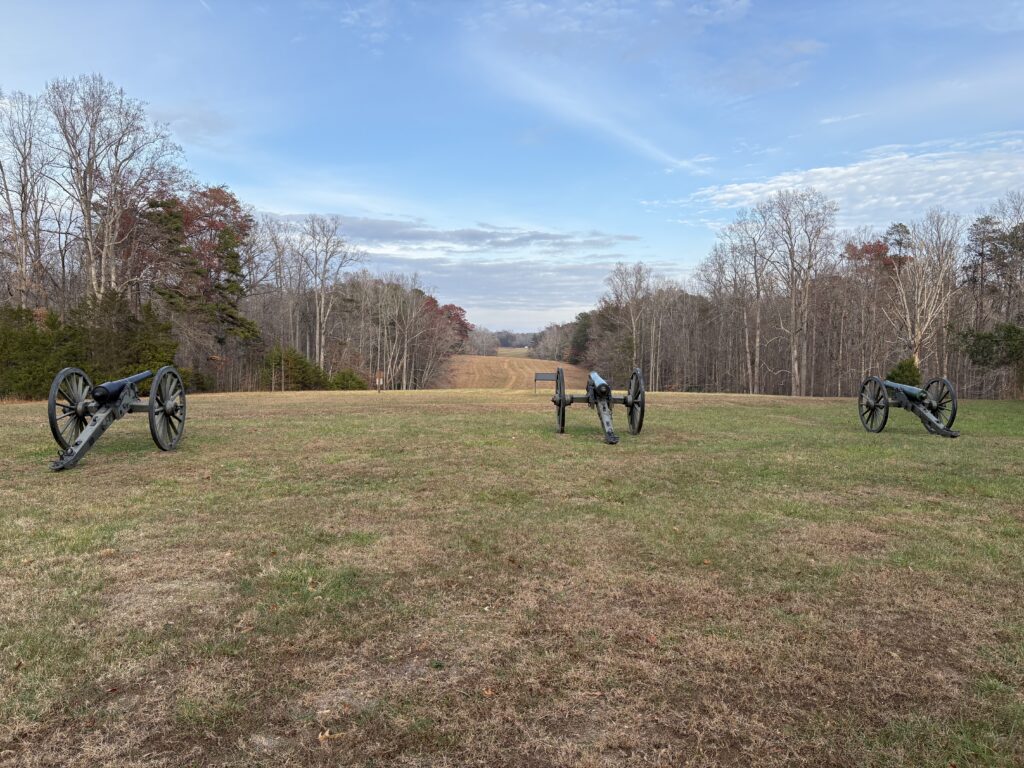
According to reports, it appears that Capt. James Carrington battery was among the guns positioned at Hazel Grove on May 3, 1863.
(Tim Talbott)
Sgt. Edwin D. Tracy, who served in the 11th New York Battery, wrote to the father of his comrade Sgt. John R. Warmington on May 5, 1863. Sgt. Tracy began his letter by stating that, “It is with feelings of heartfelt sorrow that I perform the painful task of announcing to you that John is no more. He was killed in battle day before yesterday (3d) and buried on the field.” As was often the case with condolence letters, Tracy provided some details on Sgt. Warmington’s wounding and his passing. “He died at this post a brave and true soldier, a piece of shell entered his back going completely through the body, he lived four hours in great pain when death came to his relief,” Tracy noted. Tracy penned that Warmington’s last request was for Tracy to “Write to my father and tell him I died doing my duty.” Clearly understanding the grief the Warmington’s would be experiencing, Tracy added, “You and your wife and family have my heartfelt sympathy and condolence in this terrible affliction, and we all mourn his loss.” Tracy went on to name a few of the other casualties in the battery, names that Sgt. Warmington had probably shared with his folks, or that they might have even known before the war. To emphasize the resolute bravery required for Sgt. Warmington to maintain his post, Tracy included that “We lost twenty horses killed. Our battery was in the hardest of the fight and suffered terribly. I can’t write any more as we expect to be engaged again in a few minutes.”
During Confederate Gen. Thomas J. “Stonewall” Jackson’s May 2, 1863, Chancellorsville flank attack on the Army of the Potomac’s Eleventh Corps, Capt. Ujanirtus Allen of the 21st Georgia Infantry fell wounded in the knee, quite possibly on land preserved by the Central Virginia Battlefields Trust. A week and half after the battle, Allen’s company lieutenants, Oliver T. Fears and Edward M. Henderson, wrote to Capt. Allen’s wife Susan to offer their sympathies after Allen died from his wound. “The very unpleasant and painful duty devolves upon us to write you in regard to the wound and death of your gallant, noble, and devoted husband,” the men wrote. They understood that she had probably already heard of Capt. Allen’s passing but explained, “we suppose no[ne] of the particulars have been written you yet; which we will try to give you.”
The lieutenants penned that Allen “was wounded in the evening of the 2nd inst. About 6 o’clock by a musket ball which entered his knee and caused his death. His system would not admit of amputation, if it had I think he might have recovered.” Praising Allen as a “warm friend,” they shared a closeness that developed and that was “strengthened by long association with him in service.” The lieutenants wanted Mrs. Allen to understand that “We do earnestly sympathize with you in your bereavement and in our loss of a true and devoted husband, we also feel that our loss is great and irreparable, and that the Confederacy has lost one of her brightest jewels—but we must remember that the Lord giveth and He taketh away—and hope that our loss is his eternal gain.” They related that after Allen was wounded a fellow comrade stayed with him until Allen died on May 8. Probably knowing that she would want to learn as many details as possible about his last days they informed her that their caregiving comrade told them that the captain “did not talk but very little after he was wounded. He said at times Capt seemed to suffer a great deal of pain and then became quiet again in a short time.—but when he died, he died perfectly easy and without a struggle, he said just as one falling into a slumber.” Their comrade made sure “He took care of his things and brought them to camp with him,” and believed that someone would “come after him and his effects here which we will take care of as long as we stay here; and if any comes we will send them all to you.” Fears and Henderson apologized for not writing sooner but explained their many duties since the battle had prevented quicker correspondence.
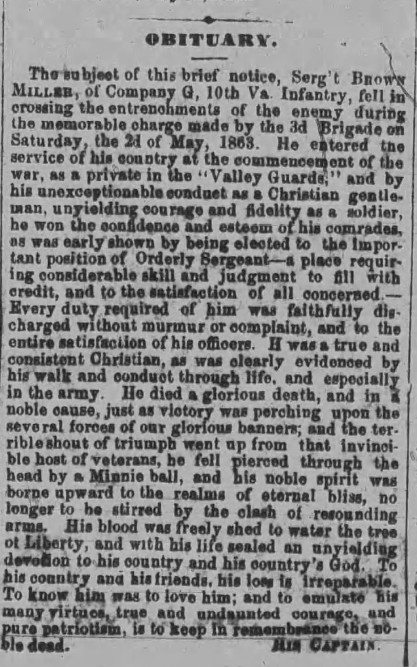
Capt. D. H. Lee Martz placed this obituary for his first sergeant, Brown Miller who was killed on May 2, 1863 at Chancellorsville.
(Rockingham Register, June 19, 1863)
Instead of sending condolence letters, some soldiers, who perhaps wished to reach a wider audience, sent obituary notices to newspapers. The obituaries often expressed sentiments similar to those contained in condolence letters to family members. Many times, obituaries came from officers who sought to honor fellow officers. However, in the following case, Capt. D. H. Lee Martz of Company G, 10th Virginia Infantry placed a notice in the June 19, 1863, Rockingham Register eulogizing a non-commissioned officer, 1st Sgt. Brown Miller of his company. Capt. Martz opened by stating that Sgt. Miller “fell in crossing the entrenchments of the enemy during the memorable charge made . . . on Saturday, May 2, 1863” at Chancellorsville. After giving a brief history of Brown’s service, including mentioning that he began his career as a private, but “by his exceptional conduct as a Christian gentleman, unyielding courage and fidelity as a soldier, he earned the esteem of his comrades” and was elected Orderly Sergeant. This position, the captain noted, was a “place requiring considerable skill and judgement to fill [it] with credit and to the satisfaction of all concerned.” Martz noted Sgt. Brown’s Christian nature “was clearly evidenced by his walk and conduct through life, and especially in the army.” “He died a glorious death, and in a noble cause . . .” falling “pierced through the head by a Minnie ball, and his noble spirit was born upward to the realms of eternal bliss, no longer to be stirred by the clash of resounding arms,” his captain believed. Incorporating mid-19th century soldierly ideals, Martz closed, “His blood was freely shed to water the tree of Liberty, and with his life sealed an unyielding devotion to his country and his friends, his loss is irreparable. To know him was to love him; and to emulate his many virtues, true and undaunted courage, and pure patriotism, is to keep in remembrance the noble dead.”
The field and line officers of the 1st Massachusetts Infantry honored one of their own by eulogizing Capt. Charles Rand who fell killed at Chancellorsville on May 2, 1863, with several resolutions that were printed in the Boston Evening Transcript on May 28. The second resolution stated: “That Capt. Rand, struck down in the place of peril and at the post of honor, deserved the encomiums of all who share the blessings of our common Government, for his heroism in sacrificing his life in its defence, and his memory should be cherished with grateful affection while the Union, Constitution and the starry flag of our liberties remain objects of homage and sources of blessing throughout our free and beloved land.” They offered Rand’s “family, relatives and friends . . . our sincere sympathy in their deep bereavement, trusting that they will be strengthened and comforted of God. . . .” They hoped that all would “reflect that our deceased brother officer died in defence of the holiest cause that ever appealed to human intrepidity for succor, and human effort for support.”
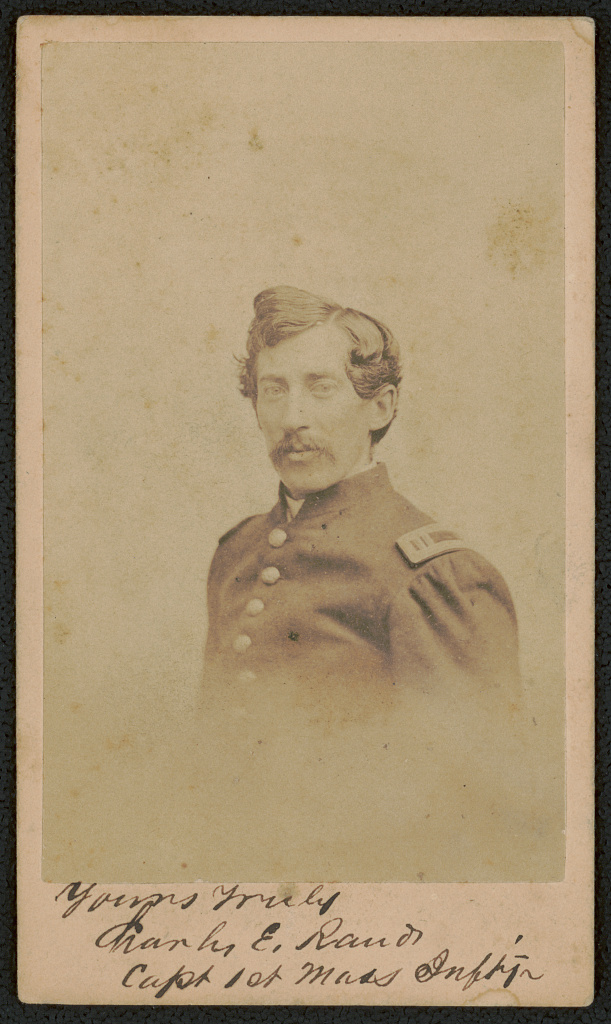
Rand’s fellow 1st Massachyusetts officers honored him with resolutions that were printed in the Boston Evening Transcript.
(Library of Congress)
The Mine Run Campaign
Although the death casualties at Mine Run paled in comparison to those at Fredericksburg and Chancellorsville, some of the losses that occurred there elicited notices and letters to honor the fallen.
The New York Tribune ran a eulogistic article in its December 16, 1863, edition honoring Lt. Col. Caspar Trepp of the 1st United States Sharpshooters (USSS), who was killed on November 30. Although an author is not identified for the piece, it gave many details often found in condolence letters, while leaving out others. It opened, “Among the saddest results of the recent campaign of the Army of the Potomac is the loss of Lieut. Col. Caspar Trepp, commanding the 1st Regiment U.S. Sharpshooters, in Birney’s division of the 3d Corps.” Like many condolence letters and soldier obituaries it gave some details on how Trepp met his demise. “This officer was killed at Mine Run on the 30th ult., while in the very front of the battle, engaged in advancing his skirmish line. His regiment, deployed as skirmishers at half distance, had already taken two lines of rifle pits, on a charge, and were pressing forward toward a third, under the leadership of Col. Trepp, when this gallant soldier was struck with a musket-ball in the forehead. His nearness to the enemy may be estimated by the fact that the ball passed through his head and plunged into the ground some distance behind him with great force,” it explained. The lengthy notice also shared some of Trepp’s history, detailing his previous service in the Crimean War, his Swiss nativity, and ascension through the ranks of the 1st USSS from captain to major to lieutenant colonel. Additionally, in the mode of condolence letters and obituaries, the article noted the significance of Trepp’s death to his regiment and his country: “In the death of this brave and accomplished officer, the service has sustained a loss which can hardly be replaced. As an officer of sharpshooters he was, it is believed, unequaled in our army. His loss will be most severely felt in the gallant regiment which he has led in so many important engagements, and which owes its reputation for efficiency, in great part, to him eminent ability as commander.” Unlike traditional condolence letters, Trepp’s Tribune obituary does not mention his surviving wife Harriet and two young daughters, Christine and Hattie and what his loss would mean to them.
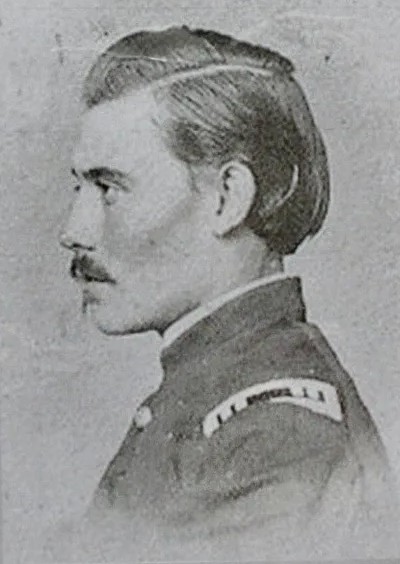
Trepp was killed on Novemnber 30, 1863, while on the advanced skirmish line at Mine Run.
(Courtesy of J. Mountain Antiques)
Published in the December 17, 1863, Richmond Whig, officers from the 23rd Virginia, led by Capt. A. J. Richardson, wrote “A Tribute of Respect” for Lt. Col. Simon T. Walton, who was killed at Payne’s Farm on November 27, 1863. The homage explained that Walton “so ably commanded the Regiment and gallantly led it in the several engagements with the enemy, and who fell whilst discharging his duty in the field, offering up his life a noble sacrifice on the alter of his country.” The tribute included a set of resolutions. The officers, although sincerely missing their leader, wrote that they “believe our loss had been his gain.” They also thought that Walton “would have adorned still higher positions but for his untimely end.” They sought to “emulate his virtues, and endeavor to maintain unsullied that reputation which his gallant conduct has won for those he commanded.” They wished to offer “his bereaved family our sympathies in their affliction, and recommend them to Him who has promised to ‘be a husband to the widow and father to the fatherless.’”
Although not a traditional condolence letter to the departed’s family, Pvt. Alexander “Ted” Barclay of the 4th Virginia Infantry, exhibited a similar spirit when he wrote to his sister Hannah about losing his close comrade George Chapin, who was killed on November 27, 1863, at Payne’s Fame. About a week after the battle, Ted penned: “How much I miss my bedfellow George Chapin. You have no idea what attachment grows between two soldiers who are constantly together. What a noble fellow he was. A gentleman and a soldier. May God comfort the afflicted mother, sisters and brother.”
Conclusion
Not all who fell from shot, shell, or bullets at Fredericksburg, Chancellorsville, and Mine Run, or who died in central Virginia’s improvised hospitals from wounds or disease received condolence letters or eulogistic obituaries in hometown newspapers; in fact, most did not. If they did, their families probably instantly recognized the form, flow of words, and sentiments contained on these pieces of paper scribbled in ink or pencil. Despite the best efforts of the writers to offer consolation and perhaps provide a sense of closure, the grief and emotional pain of earthly separation without the ability to offer a fitting goodbye only slowly faded with the passage of time.
Some Sources and Suggested Reading
Drew Gilpin Faust. This Republic of Suffering: Death and the American Civil War. Alfred A. Knopf, 2008.
Christopher Hager. I Remain Yours: Common Lives in Civil War Letters. Harvard University Press, 2018.
Irish in the American Civil War. https://irishamericancivilwar.com/
Ashley Mays. “’If Heart Speaks Not to Heart’: Condolence Letters and Confederate Widows’ Grief” in The Journal of the Civil War Era, Vol. 7, No. 3 (September 2017), 377-400.
Mark S. Schantz. Awaiting the Heavenly Country: The Civil War and America’s Culture of Death. Cornell University Press, 2008.
Parting Shot
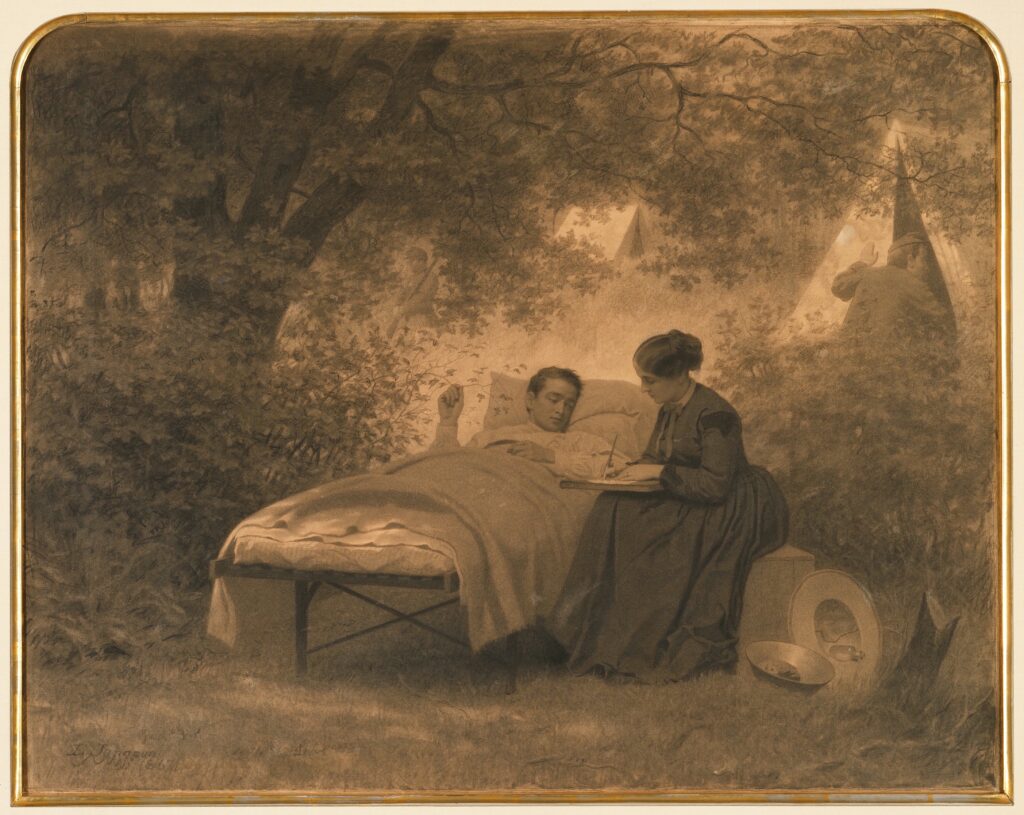
By Eastman Johnson, 1867
Condolence letters for soldiers who died from wounds or disease in army hospitals often came from the pens of their caregivers who came to know them in their last days.
(Courtesy of the Minneapolis Institute of Art)
NEWSLETTER SIGN-UP
Join our community! Sign up for our newsletter to receive exclusive updates, event information, and preservation news directly to your inbox.