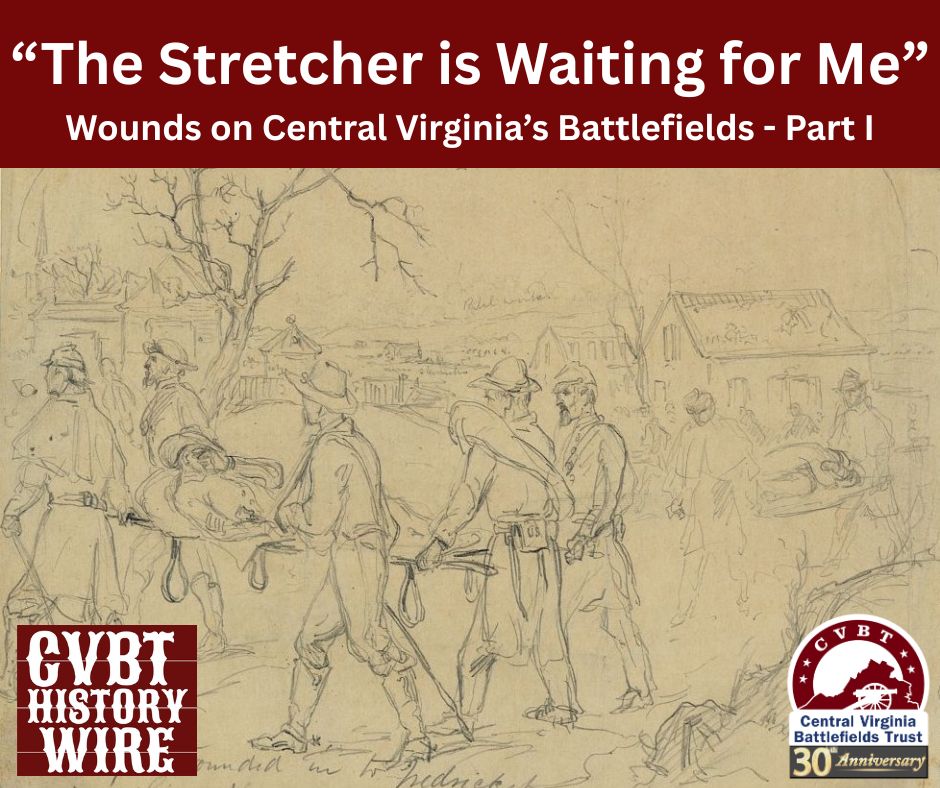
Sketch by Arthur Lumley
(Library of Congress)
Introduction
By the time Capt. Oliver Wendell Holmes, Jr. and his 20th Massachusetts Infantry (The Harvard Regiment), came under artillery fire on May 3, 1863, during the Second Battle of Fredericksburg, he fully understood the seriousness and pain of battlefield wounds. Holmes had suffered two wounds at Ball’s Bluff in October 1861; one of which was a potentially serious chest wound. Almost a year later he received a bullet through the neck at the Battle of Antietam that somehow missed his throat, spine, and carotid arteries. Amazingly, Holmes was back with his regiment just two months after Antietam. Although he missed the Battle of Fredericksburg in December 1862, due to dysentery, the 20th Massachusetts saw action yet again along the banks of the Rappahannock River five months later, when Holmes’s bad luck continued as he endured yet another battle injury.
Only 22 years old at the time and captain of Co. G, his regiment, as part of Maj. Gen. John Gibbon’s Second Corps division, Holmes and his men became a target for Confederate artillery on May 3, 1863. Despite the seriousness of his wound, Holmes wrote his mother that day with a touch of calm sarcasm mixed with frustration: “Pleasant to see a d[amne]d gun brought up to an earthwork deliberately brought to bear on you—to notice that your Co. is exactly in range—1st discharge puff—second puff (as the shell burst) and my knapsack supporter is knocked to pieces . . . 2nd discharge [and] man in front of me [is] hit—3rd whang the iron enters through [my] garter & shoe[and] into my heel—They have been firing hard ever since & as the stretcher is waiting for me I stop—”
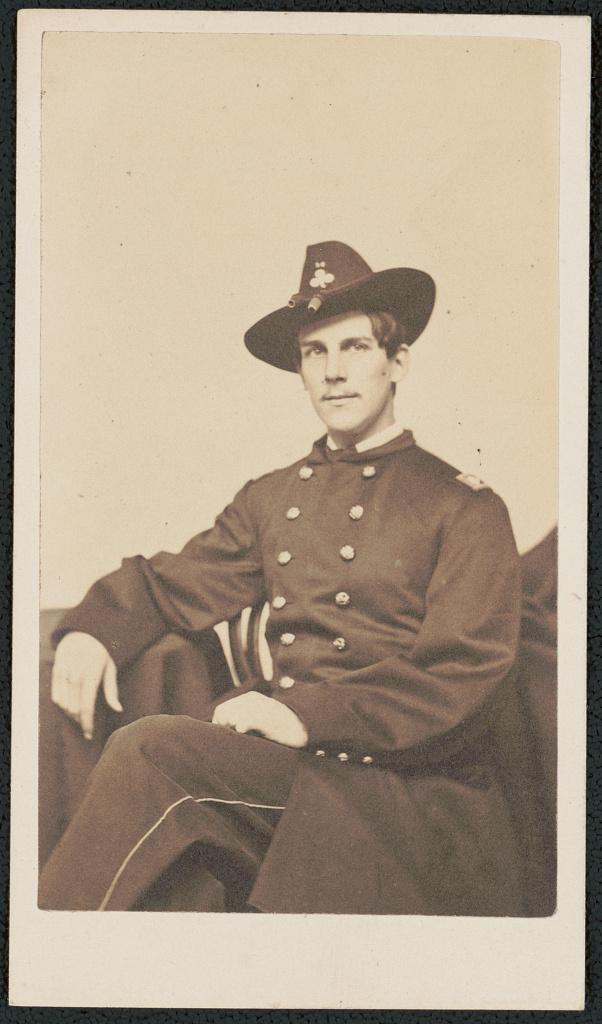
20th Massachusetts Infantry
(Library of Congress)
After recovering, Holmes reported yet again for duty, but this time in a new role. He returned as a member of Maj. Gen. Horatio Wright’s staff. Holmes continued to serve in that position until his three-year enlistment expired in July 1864.
Of the three primary categories of Civil War battlefield casualties (killed, wounded, captured/missing), the wounded were the most common. Wounds came through a whole host of causes: bullets, various artillery projectiles, bayonets, and clubbed rifles, among others.
Obviously, the term “wounded” covers a vast spectrum of experiences and was open to interpretation by those whose bodies were damaged, their comrades who witnessed the wounding, as well as by those who potentially treated battlefield injuries. A spent bullet bruising could be extremely painful and thus considered a wound by the soldier it hit, while another soldier or an attending surgeon may have laughed it off. Pretty much all wounds were painful, but not all were disabling. Wounds to the body’s fleshy parts, extremities like fingers, scalp grazes, and superficial combat injuries usually did not result in significant hospital stays or prove life threatening. However, due to the limitations of period medicine, no matter how minor the wound, if infection resulted it could easily cause death.
In this History Wire article, we will explore some accounts from Union and Confederate soldiers who endured, witnessed, or treated wounds at the Battle of Fredericksburg and during the Chancellorsville Campaign.
The Battle of Fredericksburg
The fierce fighting at Fredericksburg produced thousands of wounds on both sides. Acting on the offensive, Federal troops endured more casualties than the Confederates, who also had the advantage of often fighting from protective positions. However, no one was totally safe once the battle commenced.
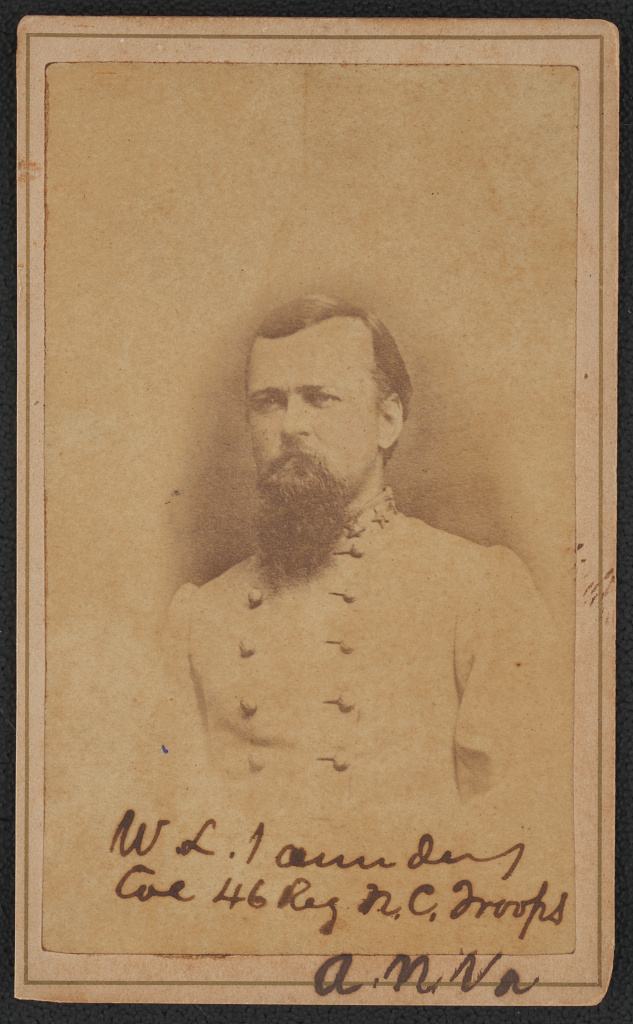
46th North Carolina Infantry
(Library of Congress)
Among the defenders was Maj. William L. Saunders and his 46th North Carolina comrades. They helped provided support against the Federal attacks along the famous Sunken Road and Stone Wall below Marye’s Heights and Willis Hill on the north end of the Fredericksburg battlefield. While in the process of moving his men toward the firing line on December 13, 1862, the concussion from a shell explosion knocked Saunders to the ground. Quickly back on his feet, a bullet buzzed his temple drawing blood. Soon thereafter, as Saunders was yelling, a bullet entered his open mouth and exited through his cheek, creating an extremely painful wound.
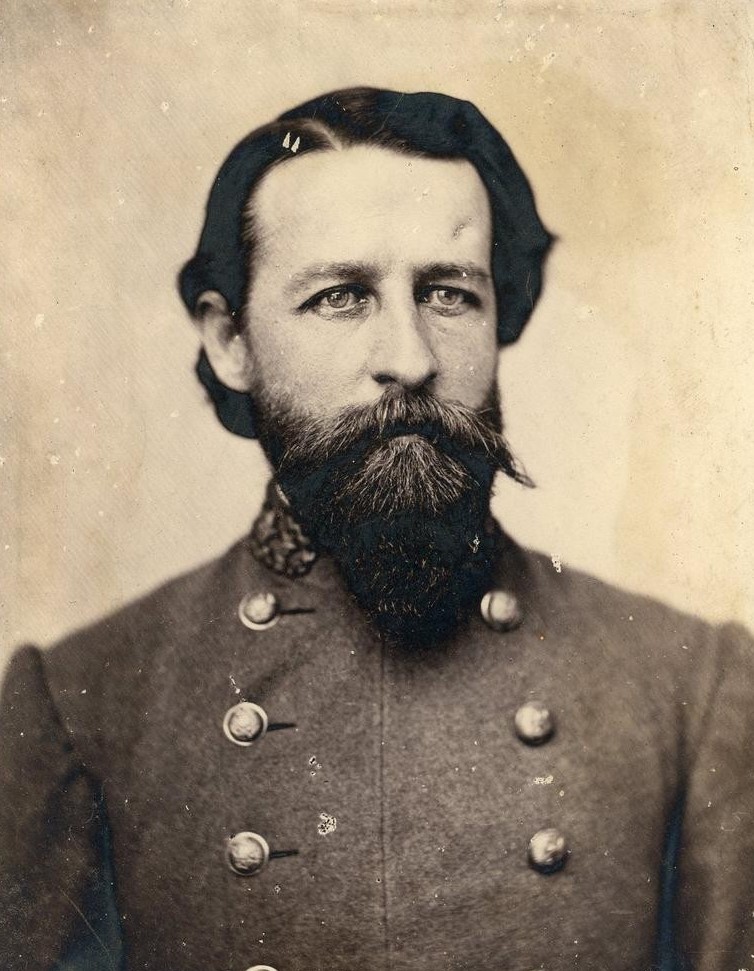
The forehead wound that Cooke received at Fredericksburg is visible in this photograph.
(Public Domain)
Brig. Gen. John Rogers Cooke, who commanded the brigade in which Saunders and the 46th North Carolina served, came from a family deeply divided by the Civil War. Cooke’s father, Philip St. George Cooke, was a Union cavalry general. One of Cooke’s brothers-in-law was J.E.B. Stuart, and another brother-in-law was Union Brevet Brig. Gen. Jacob Sharp. Injured at least seven times during the conflict, Cooke received a wound to the forehead at Fredericksburg that left a permanent though not fatal mark.
In the fighting at the southern end the battlefield, the 90th Pennsylvania’s Pvt. Lewis Wollenweber received a wound in the knee. Maj. Alfred Sellers wrote to Pvt. Wollenweber’s father the following day from a nearby army hospital: “Sir, at the request of your son, I transmit these few lines to you. He is safe and out of all danger. In the terrible engagement of yesterday, he fell while nobly fighting for his country’s honor and maintenance. He was wounded in the knee, a mere flesh wound. In a few days, he will be removed to one of the hospitals in Washington. He is well cared for now.” Unfortunately, despite the encouraging early report, Pvt. Wollenweber’s wound proved fatal. He died on January 7, 1863, and received burial in the Soldier’s Home Cemetery in Washington D.C.
Also involved in the fighting on the southern end of the Fredericksburg battlefield, Col. Adrian Root’s brigade found itself in a tough position along the Richmond, Fredericksburg and Potomac Railroad tracks. Coming to their aid was the 26th New York and Wollenweber’s 90th Pennsylvania from Col. Peter Lyle’s previously punished brigade. Virtually out of ammunition, the two regiments fixed bayonets. Flag bearers from the 26th New York fell in rapid succession. Taking up the standard was Company E’s Pvt. Martin Schubert. Previously wounded at Antietam, the German-born Schubert had a signed furlough to go home and heal better. Instead, Pvt. Schubert decided to pocket his ticket home and join his comrades at Fredericksburg, where he received another wound. Later, when asked why he stayed and fought, Schubert simply but profoundly replied, “I thought that the government needed me there.” In recognition of his bravery, Schubert received the Medal of Honor in 1863. His citation reads: “Relinquished a furlough granted for wounds, entered the battle, where he picked up the colors after several bearers had been killed or wounded, and carried them until himself again wounded.”
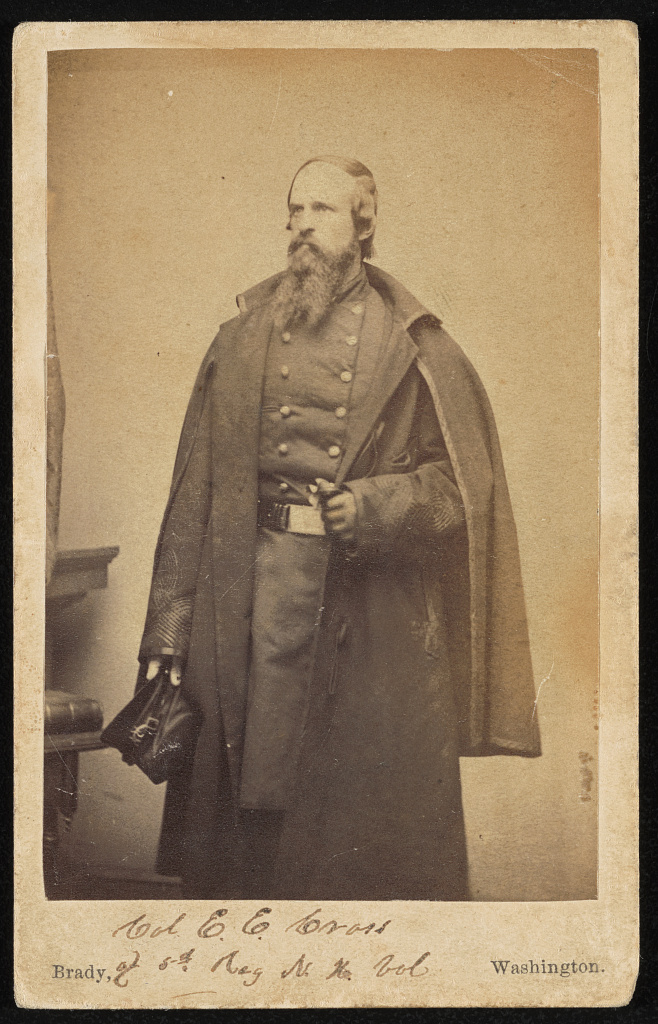
5th New Hampshire Infantry
(Library of Congress)
Writing in his journal about his experience at Fredericksburg, the 5th New Hampshire’s Col. Edward Cross provided a vivid description about how full the air was with Confederate projectiles below Marye’s Heights, and his subsequent wounding: “We were thus advancing when a shell exploded in the air directly in front of me and about the height of my head. A large fragment hit me on the breast, a smaller piece knocked out two of my teeth—& filled my mouth with sand; another bit struck me on the forehead, making a slight wound, another bit over the eye, and still another along the back of my hand. I was knocked clean off my feet, & lay insensible until roused by a violent blow on the left leg—made by a piece of shell which hit me there. Getting on my hands & knees, & spitting the sand, stones, & blood out of my mouth I looked around. The tattered colors of my Reg’t thank God were in the van! I tried to get on my feet, but could not stand. I then tried to crawl, but the balls came so thick & tore up the ground so spitefully that I could not go it—besides a ball struck my sabre scabbard, knocking me over. After that warning I concluded to lie still.”
The 3rd South Carolina’s Corp. Taliafarro “Tally” Simpson wrote to his aunt five days after the battle. He explained to her that “it will be useless for me to attempt to add any thing interesting,” yet went on to tell her that, “I was in the hottest of the fight and was slightly wounded in the shoulder. It pained me for a time, but I am nearly well already. The ball did not enter, but barked, as it were, my shoulder, stiffening it for a day or two.” Tally then went on to pen that “Our company suffered severely. Our gallant Capt. [William Hance] I fear is mortally wounded. His leg has been amputated near the body.” Tally added that “Thirty-three of forty-two who were carried into action were killed or wounded.” Capt. Hance did in fact eventually die from his wounds in Richmond on January 6, 1863.
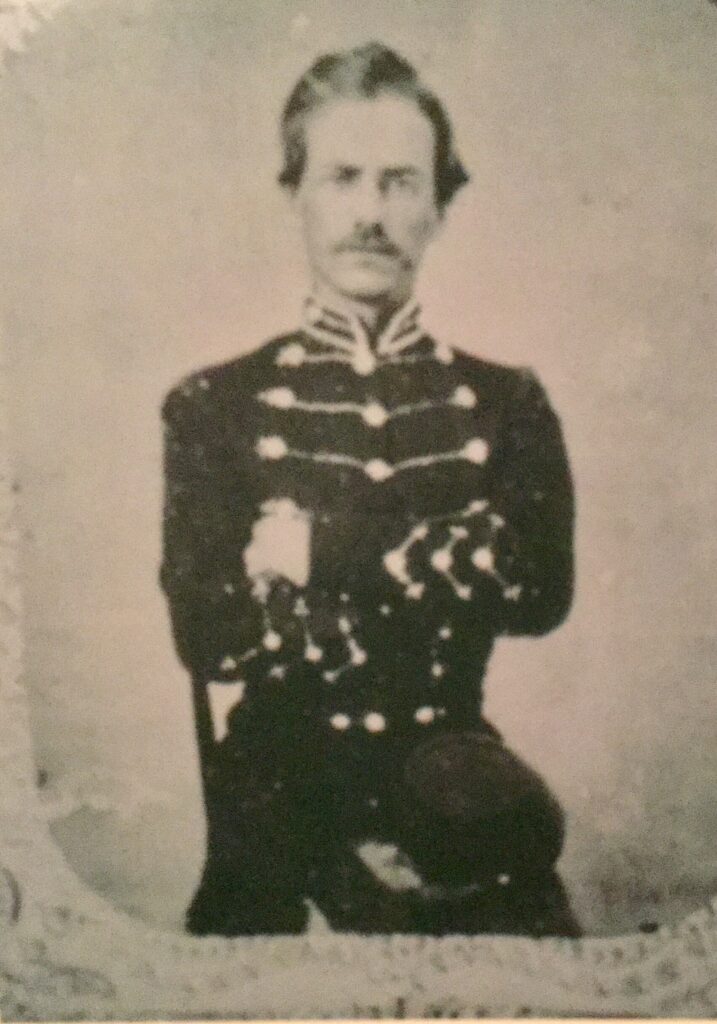
3rd South Carolina Infantry
(Find A Grave)
As Corp. Simpson mentioned, his regiment was hit hard, especially its officers. Originally posted on December 13 near “Braehead,” the Howison family house, Brig. Gen. Joseph Kershaw received orders from Maj. Gen. Lafayette McLaws to send help to shore up the defenses at the Sunken Road. The 3rd, 7th, and 15th South Carolina quickly arrived near the Willis Cemetery on the heights. The 3rd South Carolina received additional orders to support troops on the northside of “Brompton,” the Marye house. As they went into line and advanced, they took heavy infantry and artillery fire. The regiment’s officers fell in quick succession. In fact, the chain of command devolved through seven officers in the regiment during the fighting as one after another fell killed or wounded. The seventh and final, Capt. John K. G. Nance, though also wounded, remained on the field.
The 132nd Pennsylvania’s Lt. Frederick Hitchcock remembered that he was called upon to carry the regiment’s colors at Fredericksburg when it was learned that “the color-guard were all either killed or wounded.” Reaching to take the colors from a fellow lieutenant, Hitchcock recalled “a bullet crashed through [his comrade’s] arm and wrist, spattering my face with blood.” Grabbing the staff as it began to fall, “a bullet cut the staff away just below my hand,” Hitchcock remembered. Then in a flash, he was “struck on the head by the fragment of a shell and fell unconscious with the colors in my hand.” Hitchcock was uncertain how long he was senseless before he finally came to. “When I revived I was alone with the dead and wounded. The line of battle had been swept away. The field about me was literally covered with the blue uniforms of our dead and wounded men.” Attempting to make his way to the rear for treatment, Hitchcock started off. In doing so, he tried to zig-zag, but at the “first turn I got a bullet through my right leg just above the ankle.” Continuing on despite the pain, Hitchcock luckily located his commanding officer and the remnant of the regiment. Fortune smiled again on the lieutenant when he found their brigade surgeon who checked Hitchcock over and had a steward dress his wounds. Hitchcock received a promotion to major in early 1863, fought at the Battle of Chancellorsville, and then mustered out with his nine-month regiment toward the end of May. He later served as the lieutenant colonel, and then colonel, of the 25th United States Colored Infantry.
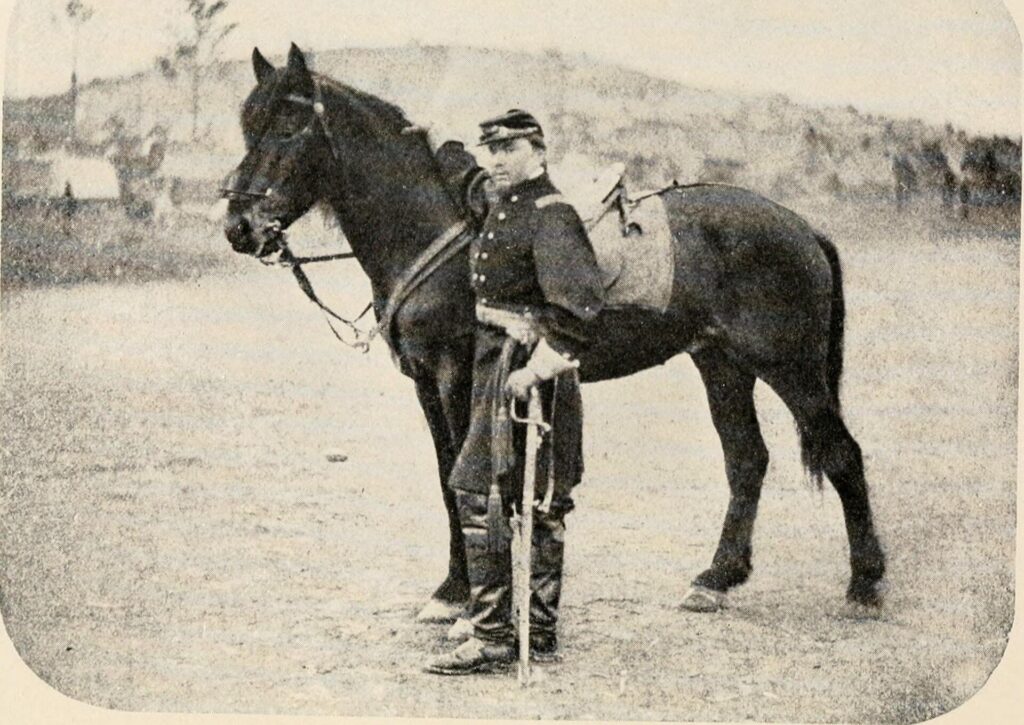
132nd Pennsylvania Infantry
(Find A Grave)
Fighting in Gen. Edward Thomas’s Georgia brigade was the 45th Georgia’s Pvt. Marion Hill Fitzpatrick. The 27-year-old Fitzpatrick wrote to his wife Amanda two days after the battle about pushing the Federals back, noting, “we followed with a rush and a yell and poured death in their ranks at every step.” After the Federals withdrew and reorganized, the Georgians charged on “and soon made them run again.” Following yet again until the Union force withdrew out of distance, Hill and his comrades came under fire from Federal skirmishers and received orders to lay down. “About a dozen balls one after another whistled close by me,” Hill penned. Using his rolled blanket as a shield over his head, “A ball stuck the blankets right against my head but did not go clear through . . . and did not hurt me.” A few moments later though a bullet or projectile hit Fitzpatrick in the left side, “which knocked me nearly senseless.” Although it turned out to be a spent round, it was nevertheless extremely painful. “I have never had anything to hurt quite so bad before. I jumped up and halloed that I was wounded. Two of our boys bore me quickly away, one under each arm. I had gone but little ways before a dizziness came over me with the strangest feeling I ever had come over me,” Hill explained. Placed in an ambulance, Hill went to a field hospital and “suffered considerably.” Even though the projectile did not penetrate his body, it left his side feeling “sore and lifeless.” Five others were wounded in Pvt. Fitzpatrick’s company during the fighting.
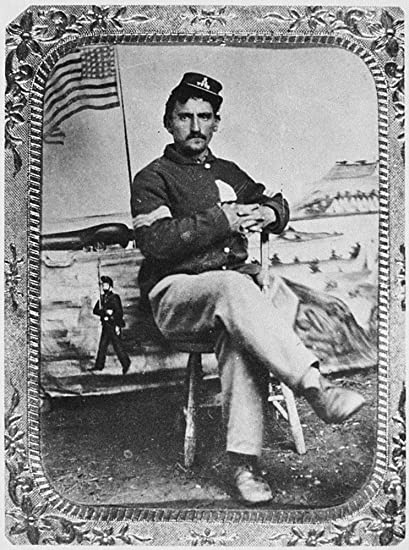
51st New York Infantry
(Public Domain)
During the Battle of Fredericksburg, approximately 12,500 United States soldiers were either killed, wounded, or went missing. One of the wounded was the 51st New York’s Capt. George Washington Whitman. Capt. Whitman was a younger brother of the well-known writer Walt Whitman. As part of Col. Edward Ferrero’s Ninth Corps Brigade, the 51st New York attacked across the open plain below Marye’s Heights. During the movement, a piece of shell fragment hit the side of Capt. Whitman’s face. Writing to his mother back in Brooklyn after the battle, the captain, attempting to ease her worried mind, shrugged off the seriousness of the wound. However, he did explain that his regiment “received the most terrific fire of grape, cannister, and percussion Shell, musketry, and everything else, that I ever saw.” Capt. Whitman recovered from his wounds, and was later captured near Petersburg in the fall of 1864. Fortunately, he survived his prisoner of war experience and returned home at war’s end.
Just before going into battle of December 13, Capt. Washington Brown of the 145th Pennsylvania scribbled a quick note to his wife. He had penned a letter to her two days before expecting to see action then but thought he should write again just in case the worst happened. After explaining that “This is the only paper I have with me,” he jotted, “I will do my best to serve my country” and said goodbye to her, his daughter, and his mother. “God bless you and if we meet no more in this world we will meet in heaven,” Brown hopefully noted. During the fighting, Capt. Brown received a wound to his right upper arm. A comrade eventually applied a tourniquet and Brown continued to lead his company until he fell faint from the loss of blood. Infection caused doctors to remove Brown’s arm on December 18 at Falmouth, and he died on Christmas Eve. Brown’s father, who was with him at the time of his death, made arrangements to take the captain’s body back to Erie, Pennsylvania, where he was buried.
In his memoir recounting his service in the 24th New Jersey, Benjamin Borton retold the story of his comrade Pvt. Martin V. Haines, who in the fighting at Fredericksburg, “was struck in two places soon after the regiment opened fire.” Borton noted that Haines’ told him his wounds “were so severe he could not retire, nor could anyone help him away.” Haines, “wounded in the breast and side, the wounds bleeding, chilled to the bone and expecting a bullet to enter my head at any moment” lay on the battlefield throughout the fight below Maryes Heights. The bullets from the Confederates’ Sunken Road volleys “struck all around me, some even scathing my body. . . .” Haines explained. “Some of the shells would burst high in the air, others strike the soft earth, throwing up clouds of mud and perhaps portions of a mangled body.” Near Haines laid “two comrades. One of whom was shot in the stomach. I shall never forget his cries,” Haines recalled. The man begged to be “put out of his misery.” The other soldier, their cook, “was shot through the legs and other parts of the body, and in his extreme agony, would rub his hands on his face, smearing it all over with blood while calling piteously for help.” When darkness finally fell, Pvt. Haines explained “helping hands lifted me . . . to take me off the field. . . .” The two wounded comrades were not as fortunate.
The day after the Battle of Fredericksburg, Pvt. Joseph Baker of the 15th New Jersey Infantry wrote to a friend detailing the casualties in his company. Fighting on the south end of the battlefield, Baker and his Sixth Corps regiment engaged first as skirmishers but then ended up in a stand-up fight that he estimated lasted two hours. Baker’s list included: “Ord. Sergeant. Geo. Martin shot in the head, Simon S. VanNess in the knee, Dick Bulgin shot in the hip, Len Cooper in the leg near the hip, John Thompson shot in left arm, Zachariah Seals shot in the jaw, Jim Timmins in the hand, John P. Brink in the hand, Jim Egbert wounded in leg, Abraham King in leg, Wm. Broadwell in the left shoulder. Missing Ed Albertson, Henry Cole, David L. Hayes, and one [other] man I believe.” Although not wounded himself, Baker stated that “I had a bullet shot right through my blanket, which was strapped on my back. It was pretty close I tell you.”
The Chancellorsville Campaign
Best known for the three days of battle (May 1-3, 1863) that occurred near the Chancellorsville crossroads, the broader campaign’s actions were actually more expansive in both distance and duration. The larger picture also included actions at Second Fredericksburg and Salem Church on May 3, as well as May 4 fighting northwest of Fredericksburg at Smith Run and Banks’ Ford, and even May 5 as Hooker retreated toward U.S. Ford.
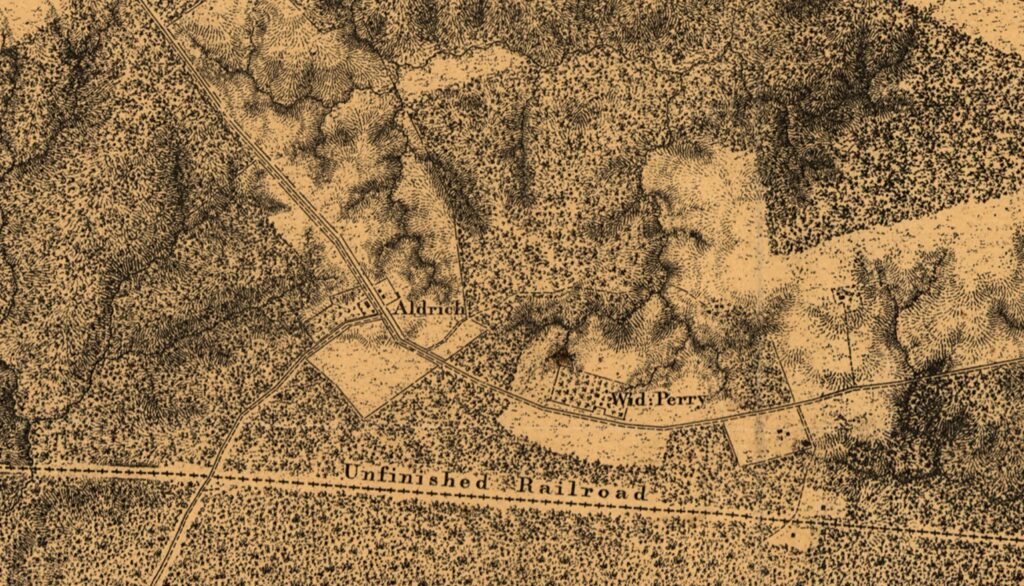
Prepared by Nathaniel Michler, 1867
(Library of Congress)
Part of the May 1, 1863, fighting occurred near the Alrich Farm, a property that CVBT is currently working to preserve. There, Maj. Gen. Henry Slocum’s Twelfth Corps ran into elements of Maj. Gen. Richard H. Anderson’s Confederate division. Among the wounded was Corp. John C. Ellis of the 111th Pennsylvania Infantry. In a letter to his nephew three weeks later, Corp. Ellis explained, “the order was given to fall back to Chancellorsville on double quick and our Regt was to cover the retreat of the balance of [Gen. Thomas Kane’s] brigade[.] [T]he other Regt[s] were so slow in moving[,] the Rebs [were] upon us before we knew it[,] so that by the time that we got to the Plank Rd the Reb Sharpshooters began to pick off our men[.] the Bullets flew like hail arond our heads[.]” One of the bullets found Ellis. “[T]he first thing I knew I was laying on my back in the ditch along side the Road,” he wrote. “[I was] struck by a bullet on the left side of the back of my neck coming out at the corner of my left eye making a verry dangerous wound[.] [W]hen I fell I was completely Paralized and Blind although I never lost my senses for a single moment[.] Ellis was believed dead, “and the Rebs were right at [our] heels so that if [my comrades] wanted to they could not have [stopped and] picked me up.” Corp. Ellis remained on the battlefield until captured by the advancing Confederates. Taken to a farmhouse, perhaps the Alrich House, he received treatment for four days until he was sent to a crowded Federal field hospital, where he was exposed to the elements for an additional three days. “[H]ow in the world I survived through it is more than I can tell[.] It was 15 days from the time I was shot untill I rejoined the Regiment again,” Ellis explained.
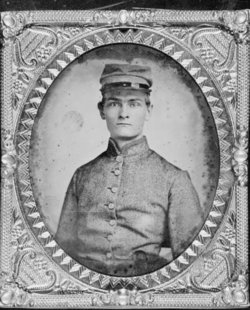
Cobb’s Legion
(Find A Grave)
Sallie Burney must have felt relief when she finally received and read a May 2, 1863, letter from her husband Lt. Samuel Burney, who served in Cobb’s Legion (Wofford’s Georgia Brigade). However, when Samuel’s next letter arrived, her heart probably skipped a beat. Samuel wrote from General Hospital No. 10 in Richmond five days after his previous letter. Lt. Burney opened with: “Thank God it is no worse. I was wounded on Sunday at the terrible Battle of Chancellorsville, May 3, 1863, at about 8 o’clock in the morning.” If that was not shocking enough, his description of the wound likely increased her anxiety: “I was struck just above the left eye on the side of my temple, the ball passing out below my left ear.” Lt. Burney affirmed that he was receiving excellent care and that his enslaved body servant, Stephen, would soon be in Richmond to help attend to him. Burney requested of her, “Do not be the least concerned about me; I can walk about, but do not do so. I feel perfectly well beside my wound.” Burney survived his injury despite the loss of his left eye. After further recuperating at home, he rejoined his regiment, then in Tennessee, in late 1863. Reassigned as a procurement officer for the Commissary Department in the spring of 1864, Burney spent the rest of the war out of harm’s way.
When Civil War soldiers were physically unable to write home, they often relied on comrades to inform loved ones of their condition. Wounded in the back at the Battle of Chancellorsville on May 3, 1863, near or on CVBT’s Nine Mile Run tract, the 16th Georgia’s Lt. Horatio David asked Corp. A. S. C. Williams to write to his father. Willams wrote to Mr. David on May 7, 1863. “I By the Request of your sone seat My self to drop you a few linnes to let you noe how he is. He is Wounded in the Small of the Back,” Williams began. Perhaps attempting to not alarm Mr. David, Williams noted that “it is Jest a flesh Wound,” and that Horatio desired his father to “Not Bee oneesy” and that he would “Write him sel[f] sune.” But Williams also explained that “I left him at the horse Pittle 15 Miles from the Rale rode and he cood not walk. I cant tell when hee will get to Richmond.” In closing Williams asked Mr. David to “excuse My Bad Writing and speling for my bely herts so Bad I cant set up well.” Lt. David healed and returned to service, but a severe facial wound near Front Royal in August 1864, took his right eyesight and precipitated his discharge from the army.

(Tim Talbott)
Thousands of soldiers’ families on both sides received letters imparting troubling news. Some told of a soldier’s sickness or capture, while others delivered words of condolence about a departed comrade. In the days following the Battle of Chancellorsville, Capt. James Carrington, who led a battery of Virginia artillery, wrote to the mother of one of his soldiers, twenty-year-old Sgt. William Kenneth McCoy, informing her of her son’s wounding. Capt. Carrington explained that in all the confusion he believed his previous letter was not sent and he “therefore deem it proper to again announce that your son was seriously wounded in the recent engagement at Chancellorsville [May 3] while he was consciously discharging his duty in a most manly way. I sympathize most deeply with you in this sad affliction.” The captain noted that Sgt. McCoy’s “gentlemanly deportment” since their first acquaintance had “caused me to form a warm attachment for him.” Carrington told Mrs. McCoy that he hoped her son would have a speedy recover, that he had been sent to Richmond for care, hoped he would be home before she received his letter, and “If so, please give him my deepest sympathy.” Sgt. McCoy died at the home a family friend in Richmond on May 19, 1863.
During fighting near Smith Run (another property that CVBT helped save) on May 4, Lt. Henry Handerson of the 9th Louisiana received a painful wound in the upper shoulder. Initially supposing he was hit with a spent bullet, Handerson eventually found medical help and received the attention he needed. Lt. Handerson remembered that evening: “The ball had struck me on the back of the large muscles of the neck and shoulder, penetrated the strap of my haversack, and, ranging inward and forward, had lodged in the right side of my neck close upon the carotid artery. Half an inch further would have inevitably ended my military career! Lying down upon the rough operating table, Surg. Love speedily extracted the ball through a small incision, and sewing up the wound, directed me to dress it and the opening in the shoulder with cold water.” Handerson was captured at the Wilderness on May 5, 1864, and spent the remainder of the war as a prisoner of war. After the conflict he became a doctor and lived until 1918.
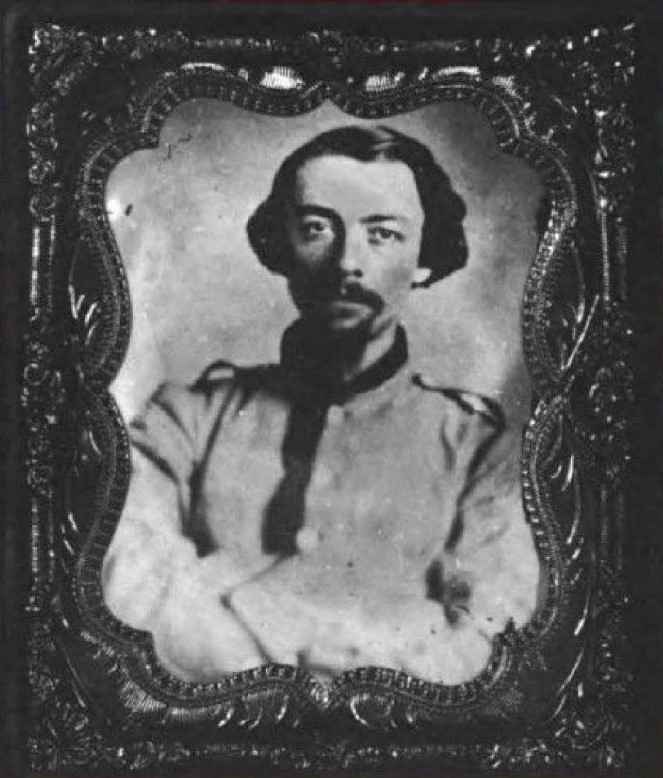
9th Louisiana Infantry
(Find A Grave)
In addition to serving the spiritual needs of their regiments, Civil War chaplains also sometimes served the men’s physical needs by treating wounds. Such was the case for the 28th North Carolina’s chaplain, Francis Milton Kennedy on May 3, 1863, near Chancellorsville. Jotting in his diary that day, Kennedy penned, “This morning the fight was renewed and the bloodiest battle of the war was fought. Our Brigade [James H. Lane’s] has been fearfully decimated, and all day the wounded were being brought in. Oh! How fearful the scene around the ‘Field Hospital’ during a bloody battle. All day I have been incessantly employed in trying to mitigate their suffering and ministering to the spiritual wants of the sufferers.”
Sgt. Jacob Patton of the 14th North Carolina Infantry (Ramsuer’s Brigade), and who hailed from Buncombe County, sometimes spelled words phonetically and often did not use punctuation. However, in writing to his father, he left a brief account of his experience at the Battle of Chancellorsville. Penning it from Hamilton’s Crossing on May 7, 1863, Patton shared that, “our reg[imen]t suffered severely we had one kiled and several wounded in our company brother william is one of the wounded he was shot in the ankle just above the Joint the doctors think he will get well without his leg being amputated[.]” Sgt. Patton explained that “we atacted the enemy in their entrenchments and drove them back a cross the river[.]” As was the case with many common soldiers after a battle, Patton wrote that, “I dont know anything about the number that was lost on either side—but from what I saw on the battle field I know the enemy loss was much larger than ours[.]” Patton ended his missive with a list of the wounded in his company and what wounds they received. He closed, as soldiers often did, with a simple but earnest request, “write soon.”
Musician Jacob Nathaniel “Nat” Raymer of the 4th North Carolina Infantry wrote to the Iredell Express newspaper on May 11, 1863, from Fredericksburg. In his letter, he shared some of sights he witnessed at the forward field hospital at Wilderness Church. After the Chancellorsville fighting finally slacked off at around noon on May 3, “An hour later, and the wounded began to arrive,” Raymer noted. Then, at the site, “the butchery begins, and amputated limbs are tossed carelessly about,—wounds are probed, balls extracted, the blood-besmeared soldiers are washed and all made as comfortable as circumstances will allow.” Raymer also provided some descriptions of some of the soldier patients there: “If you could see their faces burnt with powder,—broken arms dangling by their side,—clotted masses of blood hanging in their hair, or the life-tide gushing from ghastly wounds on their bodies;—or hear them beg for help, or one drop of water; then would you think them more worthy of love and kindness?—I have seen it, and more than I dare attempt to portray.” Musician Raymer surrendered at Appomattox and lived until 1909, passing at age 72.
Conclusion
As the previous accounts from the Battle of Fredericksburg and the Chancellorsville Campaign show, wounds occurred in various ways and with significant damage and pain to those who received and survived them.
It is estimated that shoulder arm projectiles—most commonly the minie ball—inflicted over 90% of the Civil War’s battlefield wounds. The large, heavy, and relatively slow-moving bullet mangled flesh and splintered bones when it entered human bodies. Most bone-damaging wounds required amputations that usually ended soldiers’ service and left them with physical challenges for the rest of their lives. However, while the focus of this article deals solely with soldiers’ bodily wounds, we should also keep in mind that the Civil War inflicted tens of thousands of emotional and mental wounds that also left lasting scars of their own.
Parting Shot
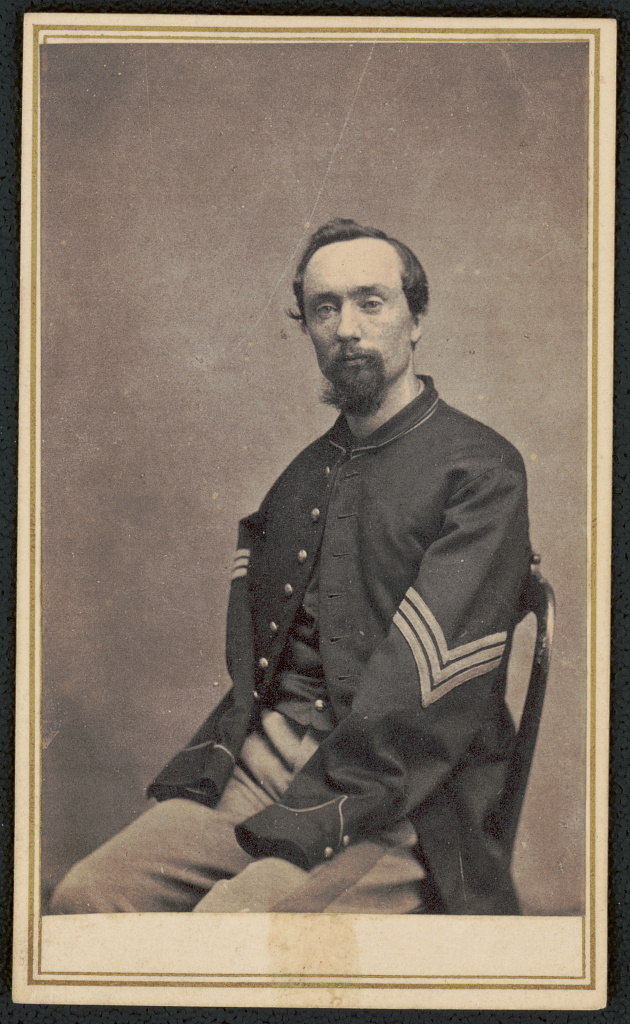
21st Massachusetts Infantry
(Library of Congress)
Born in Ireland, Sgt. Thomas Plunkett, 21st Massachusetts Inf., lost both of his arms to an artillery shell at the Battle of Fredericksburg. Plunkett’s Medal of Honor citation reads: “Seized the colors of his regiment, the color bearer having been shot down and bore them to the front where both of his arms were carried off by a shell.”
NEWSLETTER SIGN-UP
Join our community! Sign up for our newsletter to receive exclusive updates, event information, and preservation news directly to your inbox.
STAY UP TO DATE

Celebrating 30 Years and Over 2,000 Acres of Battlefields Preserved